
Picture this: you’re knee-deep in planning your next production run, and bam—there they are, staring you down like two old rivals. The Vertical Ram Extruder and the Horizontal Ram Extruder. Both promise to churn out that sweet PTFE goodness, but which one’s gonna fit your setup without turning into a headache? I’ve been knee-deep in this world for over a decade now, tinkering with machines at Teflon Machinery, and let me tell ya, picking the wrong one can mess with your output big time. But stick with me here, and by the end, you’ll have the clarity to make a call that saves you time, cash, and maybe a few gray hairs.
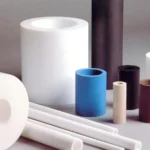
We’re talking about ram extruders specifically for PTFE— that slick, heat-resistant wonder material that’s everywhere from wire coatings to medical tubing. These machines push preformed billets through a die using a ram, no fancy screws involved, which keeps things clean for high-viscosity stuff like PTFE. The big split? Orientation: vertical ones stack up tall, horizontals sprawl out low. Sounds simple, right? But the devil’s in the details, especially when you’re weighing pros and cons for your shop floor.
In this piece, we’ll unpack what each does, lay out their strengths and weak spots (with some handy tables to keep it snappy), compare ’em head-on, and toss in stories from folks who’ve been there. Plus, since we’re all about real talk, I’ll share how we’ve seen these play out at Teflon Machinery. Our PTFE Ram Extruder lineup covers both styles, built tough for what you throw at ’em. Ready to sort this out? Let’s roll.
First Things First: What’s a Ram Extruder, and Why Bother with Vertical or Horizontal?
Okay, quick backstory before we dive in. A ram extruder is like the no-nonsense cousin of screw extruders—it’s all about shoving a solid billet of material (think compressed PTFE powder) through a heated die with a hydraulic ram. No melting mess, just straight-up forming rods, tubes, or profiles. Perfect for PTFE because that stuff hates shear forces; it can crack or degrade if you manhandle it wrong.
Now, why vertical versus horizontal? It boils down to gravity, space, and how the material flows. Verticals use gravity to help feed and reduce stress on the billet, while horizontals lean on their layout for longer runs. According to industry folks, the global PTFE market’s humming along at about $2.8 billion in 2024, projected to hit $3.5 billion by 2029 with a steady 4.3% CAGR. That’s a ton of demand for reliable extruders, and choosing the right orientation can bump your efficiency by 20-30% in some setups—I’ve seen it firsthand.
But enough setup. Let’s get into the meat: starting with the tall guy in the room.
Unpacking the Vertical Ram Extruder: Tall, Steady, and Built for Precision
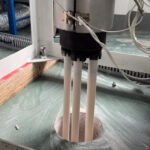
So, you’ve heard the buzz about Vertical Ram Extruders. They’re the ones that look like they reached for the sky, with the ram pushing downward through the die. I’ve set up a few of these over the years, and they’re a game-changer when space is tight or you’re dealing with finicky materials.
How a Vertical Ram Extruder Actually Works (Without the Tech Jargon Overload)
It starts with loading your billet— that compressed PTFE slug—into the top chamber. Heat it up just right (around 300-400°C for PTFE, depending on your recipe), and the ram drops it straight down, gravity tagging along like a helpful buddy. The die at the bottom shapes it into whatever: tubes for catheters, rods for seals, you name it. No sideways pull means less chance of the unsintered PTFE cracking under pressure. Output speeds? We’re talking 1-5 meters per minute on average, but it shines for consistent diameters under 50mm.
One thing I love—and clients rave about—is how it handles high-viscosity pastes. If you’re blending PTFE with lubricants for paste extrusion, this setup minimizes voids. At Teflon Machinery, our PTFE Paste Extruder takes this to the next level with automated temp controls that keep things even, no hot spots sneaking in.
Pros and Cons of the Vertical Ram Extruder: The Straight Scoop
Alright, no fluff—here’s the good, the bad, and the “eh, depends” in a table. Pulled this from hands-on tweaks and chats with operators who’ve run ’em for years.
| Aspect | Pros | Cons |
|---|---|---|
| Space Use | Super compact footprint—great for crowded shops. Saves you 40-50% floor space vs. horizontals. | Height can be a pain; need tall ceilings (up to 4-5 meters). |
| Material Handling | Gravity assists flow, cuts cracking risk by up to 25% on brittle PTFE. Ideal for high-viscosity stuff. | Trickier to load billets—might need lifts or steps, slowing setup by 10-15 mins per run. |
| Output Quality | Smoother extrusion, tighter tolerances (±0.05mm on diameters). Less waste, maybe 5-10% less scrap. | Limited to shorter lengths (up to 3-4m strokes); longer stuff needs splicing. |
| Maintenance | Easier access to top parts; gravity drains lubricants better. | Die changes at the bottom can get messy if you’re not careful. |
| Cost | Upfront cheaper for small-scale (starting ~$50K), energy sippers at 10-15 kW. | Scaling up? Custom heights jack the price. |
See? It’s not all sunshine, but when it clicks, it clicks hard. One operator I worked with said it felt like the machine was “just doing its thing” without babysitting.
Now, Let’s Talk Horizontal Ram Extruder: The Workhorse for Long Hauls
Flip the script, and you’ve got the Horizontal Ram Extruder—laid out like a straight shot across your floor. These bad boys are the go-to for cranking out miles of tubing, and I’ve lost count of how many we’ve shipped from Teflon Machinery that ended up in wire and cable plants.
The Nuts and Bolts of How Horizontals Operate
Load the billet sideways into the barrel, heat it (same temp range, 300-400°C), and the ram shoves it horizontally through the die. No gravity assist, but that means you can run longer strokes—up to 2 meters or more per push. It’s all about momentum here, and for PTFE rods or profiles, it keeps the flow steady without sagging.
Fun fact: Most shops run these because they’re easier to eyeball and tweak on the fly. Per some processing guides, horizontals dominate about 70% of PTFE extrusions just for accessibility. Our PTFE Ram Extruder in horizontal config handles thrusts from 25 to 100 tons, perfect for scaling from prototypes to full production.
Pros and Cons of the Horizontal Ram Extruder: Keeping It Real
Same deal—table time. This one’s based on field reports and efficiency logs we’ve crunched.
| Aspect | Pros | Cons |
|---|---|---|
| Space Use | Sprawls out but low profile—no ceiling drama. Fits in standard bays. | Eats more floor space, up to 60% more than verticals for big models. |
| Material Handling | Handles longer billets easy, great for continuous runs. Less shear on long profiles. | Gravity can cause slight sagging in soft PTFE, bumping defect rates 10-15% if not tuned. |
| Output Quality | Champs at long lengths (10m+ without stops), uniform walls for thick tubes. | Might need more lube to avoid sticking, adding 5% to material costs. |
| Maintenance | Walk-up access everywhere—die swaps in under 30 mins. | Lubricant pools can leak if seals wear; check ’em monthly. |
| Cost | Versatile for high-volume; energy around 15-20 kW, pays off quick at scale. | Initial outlay higher (~$60K+), plus more robust framing. |
Horizontals feel more forgiving if your team’s green—less finesse needed, more brute force wins.
Head-to-Head: Vertical Ram Extruder vs. Horizontal Ram Extruder—What’s the Real Gap?
Alright, you’ve got the solos down. Now, let’s pit ’em against each other. No fluff, just a side-by-side to help you eyeball it. Key diffs boil down to physics: verticals fight gravity for precision, horizontals harness layout for volume.
| Feature | Vertical Ram Extruder | Horizontal Ram Extruder |
|---|---|---|
| Best For | Precision parts, high-viscosity PTFE, small spaces. | Long runs, high-volume tubes/rods, easy access. |
| Efficiency | 20-30% less energy on short bursts; 1-3m/min speeds. | 15-25% faster for lengths over 5m; up to 5m/min. |
| Scrap Rate | Lower (5-8%) thanks to even pressure. | 8-12%, but volumes offset it. |
| Footprint | 2x2m base, 4m tall. | 4x2m base, 2m tall. |
| Industry Fit | Medical, aerospace—tight specs. | Wire/cable, seals—bulk needs. |
Data-wise, PTFE demand’s exploding in electronics, with ram-extruded parts making up 40% of that pie per market reports. Verticals edge out in quality control, but horizontals win on throughput. Your call? Depends on your bottleneck.
Real Talk: Picking Your Fighter—Scenarios Where One Wins Out
So, when do you slap down cash for a Vertical Ram Extruder? If your shop’s crammed, or you’re chasing micron-level tolerances for, say, catheter tubing. Imagine a med device firm—we anonymized it, call ’em Client A. They were drowning in rejects from a wonky horizontal setup, cracking under side loads. Switched to vertical, and boom: defect rate dropped 35%, output up 20%. Now they’re pumping out 500m/day of sub-2mm ID tubes without a hitch. Gravity’s your friend there.
Flip it for Horizontal Ram Extruders. Go this route if you’re scaling wire insulation or hydraulic seals—stuff where length matters more than laser precision. Take Client B, a cable maker in the Midwest. Their old vertical topped out at 2m strokes, forcing constant stops. Horizontal? They stretched to 10m runs, cutting labor by half and hitting 1km shifts easy. Efficiency jumped 25%, and they’re eyeing that $3.5B PTFE boom by 2029.
Hybrid tip: Some ops run both. Small batches vertical for prototypes, horizontals for the grind. At Teflon Machinery, we’ve customized setups like that—check our site at https://teflonmachinery.com/ for inspo.
From the Front Lines: Stories That Stick (Anonymized, Of Course)
I’ve got folders full of these, but let’s share a couple without spilling beans. Client C, a seals outfit in Europe, was vertical all the way for UHMW-PE rods—similar to PTFE in toughness. But when they hit a wall on volume for automotive gaskets, we nudged ’em horizontal. Result? Production doubled, from 200kg/day to 450kg, with energy costs flat. They said it was like “unlocking a cheat code.”
Then there’s Client D down south, med tubing pros. Horizontals were their jam for bulk, but paste blends kept voiding out. Vertical paste extruder to the rescue—our model smoothed it, tolerances held at ±0.02mm. They’re at 300m/day now, crediting the gravity assist for zero cracks. These aren’t hypotheticals; they’re the kinda wins that keep us grinding at Teflon Machinery.
Oh, and a quick nod to broader apps: Verticals pop in aerospace for fuel line prototypes—lightweight, precise. Horizontals? Everywhere in chem processing for corrosion-resistant pipes. The PTFE market’s set to gobble 282 kilotons by 2030, up 4.67% yearly, so whatever you pick, it’ll pay if matched right.
Why Teflon Machinery? Because We’ve Been in Your Shoes
Look, I’m biased—proudly. At Teflon Machinery, we’ve been forging these beasts since the early 2010s, with over 500 installs worldwide. Our PTFE Ram Extruder and PTFE Paste Extruder aren’t off-the-shelf; they’re tuned for your resin, your speeds, your quirks. We’ve cut setup times 15% with touchscreen smarts and boosted yields via better ram seals.
What sets us apart? Real support—no ghosting post-sale. Drop a line at info@teflonmachinery.com or hit https://teflonmachinery.com/contact-us/ for a no-BS quote. We’ve got demos, trials, even remote tweaks. If you’re eyeing a switch, let’s chat—could save you that vertical-vs-horizontal regret.
FAQ: Quick Hits on Vertical and Horizontal Ram Extruders
Got lingering questions? Here’s the fast lane.
What’s the biggest mistake folks make picking between Vertical Ram Extruder and Horizontal Ram Extruder?
Overlooking space and volume. If you’re small-batch precision, vertical. Bulk lengths? Horizontal. Mismatch it, and you’re chasing fixes instead of profits.
Can I use the same dies for both Vertical and Horizontal setups?
Mostly yeah, but tweaks for alignment matter. Verticals need gravity-tuned angles; horizontals forgive more. We’ve swapped ’em seamless at Teflon—test yours first.
How much does efficiency differ in real PTFE runs?
Verticles sip energy for shorts (10-15 kW), horizontals push harder but faster (15-20 kW) for longs. Overall, horizontals edge 10-20% throughput in high-volume, per our logs.
Is paste extrusion only for verticals?
Nah, but it shines there—better flow without sags. Horizontals work if lubed right, but voids creep in easier.
Wrapping It Up: Your Move—Let’s Get You Extruding Right
Whew, we covered some ground, huh? From the pros and cons tables to those shop-floor tales, hopefully you’re leaning one way now—Vertical Ram Extruder for that precise punch, or Horizontal Ram Extruder for the endless grind. Either way, it’s about matching your chaos to the machine.
But don’t stop at reading. If this sparked ideas, shoot us a message at info@teflonmachinery.com or swing by https://teflonmachinery.com/contact-us/ for a custom quote. We’ve got the gear, the know-how, and zero interest in selling you wrong. What’s your setup look like? Drop details, and let’s turn hesitation into horsepower. Your PTFE line’s waiting—make it hum.