
Ever walked into your shop and seen a batch of PTFE rods come out looking more like twisted pretzels than precision stock? Yeah, been there. I remember the first time it happened to me—years back, when I was knee-deep in setting up a line for a small outfit making tubes for medical gear. The whole run was scrap, and we lost a day figuring out why the sintering just wasn’t holding steady. Turns out, it was all about the oven setup, but nobody had laid it out straight. That’s why I’m putting this together. If you’re cranking out PTFE rods, sheets, or tubes, you need sintering ovens that don’t just work—they make your life easier. We’re talking Sintering Ovens for PTFE Rods, Sheets, Tubes that turn raw preforms into tough, reliable shapes without the headaches.
I’m no stranger to this grind. Over 15 years tinkering with PTFE gear at places like Teflon Machinery, I’ve seen setups that shine and ones that flop hard. This guide? It’s pulled from those trenches—real tweaks, busted myths, and the kind of advice that saves you cash and time. We’ll walk through the basics, the nitty-gritty process, picking the right oven, dodging dumb mistakes, and even some stories from the field (names changed, of course). By the end, you’ll have a clear path to dialing in your production. And if it clicks, hit up Teflon Machinery—we’ve got PTFE Sintering Ovens built for exactly this.
Let’s jump in. No fluff, just stuff that sticks.
What Exactly Are Sintering Ovens for PTFE Rods, Sheets, Tubes—And Why Bother?
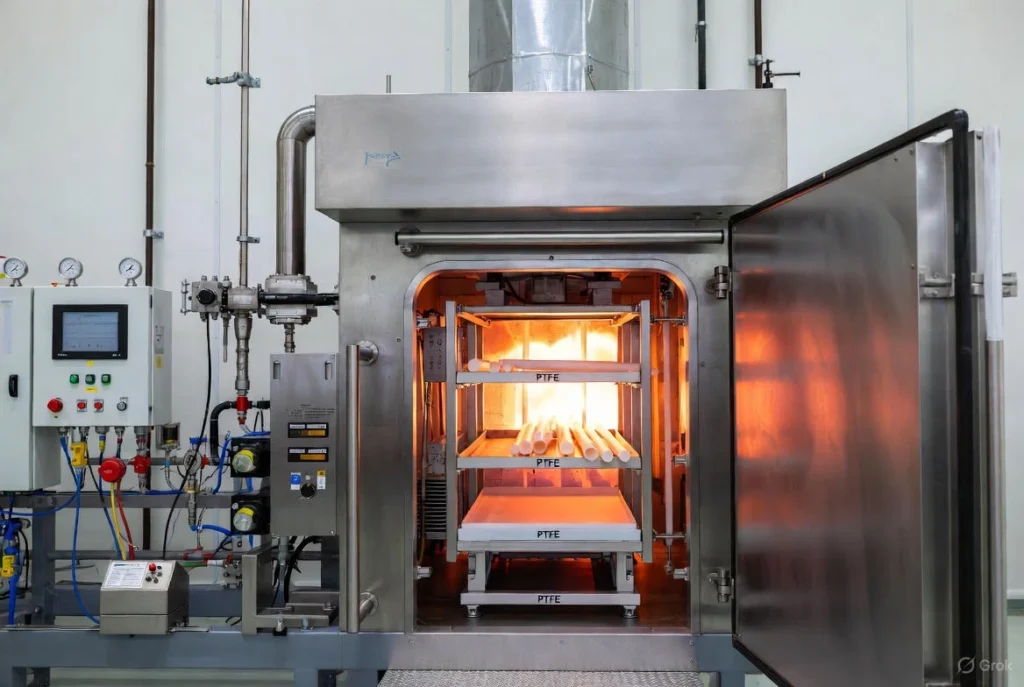
Picture this: You’ve got your PTFE powder packed into molds, ram extruded, or sheet-pressed. It’s holding shape, but it’s porous, kinda like a sponge. To make it into the solid rods, sheets, or tubes your clients demand—stuff that laughs off chemicals and heat—you gotta sinter it. That’s where Sintering Ovens for PTFE Rods, Sheets, Tubes come in. These bad boys heat your preforms just right, fusing the particles without melting the whole mess into goo.
Why care? Well, PTFE’s a beast for stock shapes because it’s non-stick, super tough on abrasion, and works from -200°C to 260°C without blinking. But skip proper sintering, and your rods warp, sheets crack, or tubes leak under pressure. The global PTFE market’s booming—hitting about 225 kilotons in volume this year alone, per Mordor Intelligence reports—and a chunk of that’s stock shapes like yours. Factories pumping these out need ovens that keep up, or you’re leaving money on the table.
From my days on the floor, I’ve learned sintering isn’t rocket science, but it feels like it if your oven’s off. A good one controls temp ramps slow and even, hits that sweet spot around 360-380°C (that’s straight from Chemours’ processing guides—don’t go higher or you’ll degrade the polymer), and cools without shocking the material. We’re not talking some generic heat box; these are tailored for PTFE’s quirks, like its high melt point of 342°C where it goes all gel-like before solidifying.
If you’re scaling up from hobby-level presses to full runs, investing in dedicated Sintering Ovens for PTFE Rods, Sheets, Tubes pays off quick. They cut cycle times, boost yield rates to 95% or better, and let you tweak for different diameters—say, 5mm capillary tubes versus 100mm rods.
Breaking Down PTFE Stock Shapes: Rods, Sheets, and Tubes in the Real World
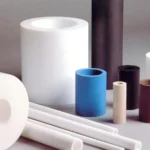
Before we geek out on ovens, let’s talk shapes. Rods are your workhorses—cylindrical beasts used for bushings, seals, or machined parts in pumps. Sheets? Flat slabs for gaskets, liners, or cutting into custom bits. Tubes handle fluids like pros, popping up in labs, pharma lines, or even aerospace fuel systems.
Each one’s a pain in its own way during sintering. Rods sag if unsupported, sheets curl at edges, tubes oval out under gravity. That’s why your oven setup matters—racks, airflow, even how you load ’em.
Take rods: Extrude ’em first via ram methods, then sinter vertically to fight gravity. Sheets compress in molds, then horizontal sintering with weights to keep ’em flat. Tubes? Often paste-extruded with lubricants, then slow-bake to burn off volatiles before full sinter.
Industry stats back this up—the PTFE rod market alone is eyeing steady growth, part of that $2.8 billion pie in 2024, according to MarketsandMarkets. But here’s the rub: Poor sintering eats into profits. I’ve seen shops waste 20-30% on rejects because their oven couldn’t handle batch variations.
At Teflon Machinery, our PTFE Sintering Ovens are designed with modular racks for all three—rods on pins, sheets on trays, tubes on mandrels. It’s not fancy talk; it’s from running thousands of cycles ourselves.
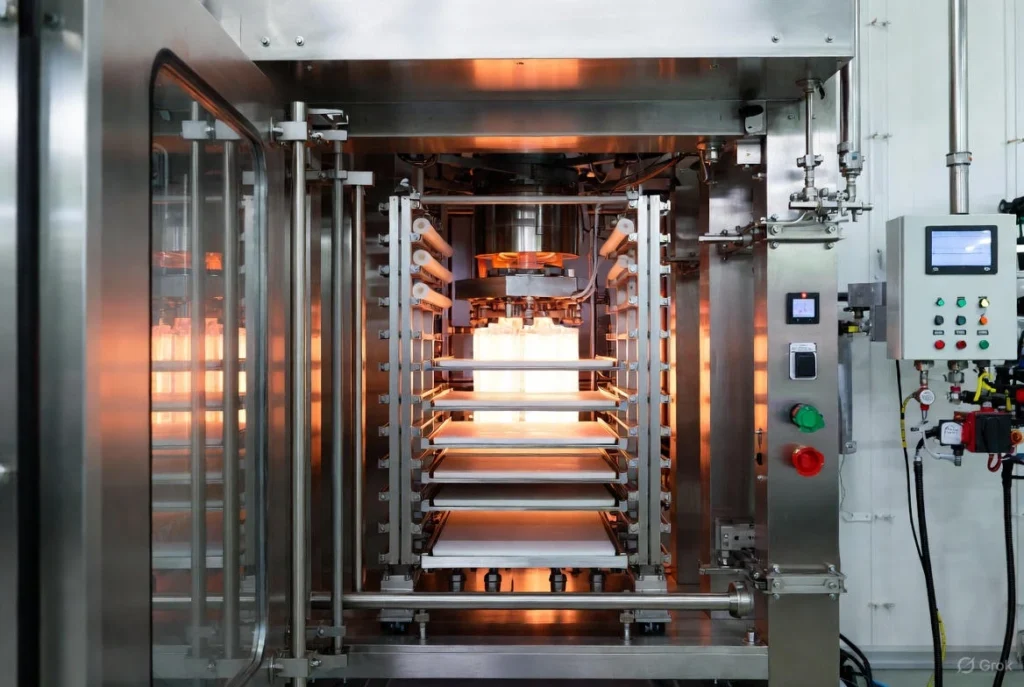
The Sintering Lowdown: Step-by-Step for Killer Results
Alright, let’s roll up sleeves and walk through it. Sintering PTFE ain’t plug-and-play, but once you nail the sequence, it’s like clockwork.
Step 1: Prep Your Preforms
Start with clean, dry pieces. Any oil or dust? Kiss uniformity goodbye. For rods and tubes, stand ’em vertical in fixtures. Sheets lay flat, maybe pinned at corners.
Pro tip from the floor: Preheat your oven to 100-150°C for an hour. Drives off moisture without stress. I’ve skipped this once—ended up with bubbles like bad soda.
Step 2: Ramp to Melt
Crank heat slow—2-5°C per minute—to 327°C, PTFE’s melt point. Here, it softens but doesn’t flow yet. Hold 30-60 minutes. This gels the particles together.
Data point: Studies from the National Institutes of Health peg optimal ramps under 5°C/min to avoid cracks. Rush it, and your sheets delaminate.
Step 3: Full Sinter at Peak Temp
Bump to 360-380°C, hold 2-6 hours depending on thickness. Thicker rods (over 50mm) need longer—say, 4 hours at 370°C. Airflow’s key; stagnant heat spots your tubes unevenly.
From Inoflon’s processing guide, that’s the goldilocks zone—hot enough to fuse, cool enough not to decompose.
Step 4: Controlled Cool-Down
Drop at 20-50°C/hour to room temp. Too fast? Crystallinity spikes, making it brittle. Aim for 25°C/h, like in those NIH tests on Al-rich blends, but it applies here.
Whole cycle? 8-12 hours for a batch. But with smart ovens, you overlap loads for near-continuous runs.
| Step | Temp Range (°C) | Time | Key Watch-Out | Shape-Specific Tip |
|---|---|---|---|---|
| Prep/Preheat | 100-150 | 1 hour | Moisture traps | Rods: Vertical load to prevent bow |
| Ramp to Melt | Up to 327 | 30-60 min hold | Uneven softening | Sheets: Weight edges lightly |
| Full Sinter | 360-380 | 2-6 hours | Overheating degradation | Tubes: Mandrel support against ovaling |
| Cool-Down | Down to RT | 4-8 hours | Thermal shock cracks | All: Uniform airflow, no drafts |
This table’s a quick cheat sheet—print it, tape it by the oven. Saved my bacon more times than I can count.
Picking Your Sintering Oven: What Fits Your Setup?
Not all ovens are created equal. You’re after Sintering Ovens for PTFE Rods, Sheets, Tubes that match your volume and specs. Batch-style for small runs? Continuous tunnel for high-output?
From experience, start with capacity. A 500kg load oven handles mid-size shops; go bigger for 24/7 ops.
Key features:
- Temp Control: PID systems holding ±2°C. Anything looser, and your rods vary in density.
- Air Circulation: Forced fans for even heat. Static ones? Hot spots galore.
- Safety Bits: Overheat shutoffs, inert gas options if you’re paranoid about oxidation (PTFE hates it above 400°C).
- Energy Smarts: Insulation cuts bills—I’ve retrofitted old units and shaved 15% off power.
Compare ’em quick:
| Oven Type | Best For | Load Size | Cycle Time | Cost Ballpark | Drawback |
|---|---|---|---|---|---|
| Batch Box | Small batches, R&D | Up to 200kg | 10-14 hrs | $10k-30k | Downtime between loads |
| Vertical Tower | Rods/Tubes focus | 300-800kg | 8-12 hrs | $40k-80k | Less flexible for sheets |
| Continuous Tunnel | High volume | 1+ tons/day | Ongoing | $100k+ | Upfront hit, space hog |
| Hybrid Modular | Mixed shapes | 500kg avg | 6-10 hrs | $50k-90k | Learning curve on swaps |
Teflon Machinery’s PTFE Sintering Ovens lean hybrid—swap racks for rods one day, sheets the next. We’ve shipped ’em to outfits in Asia cranking 50 tons a month, and they report 98% uptime.
Budget? Factor ROI. A solid oven pays back in 6-12 months via less scrap. Chat with us at info@teflonmachinery.com for a custom quote—no pressure.
Dodging the Big Goofs: Common Pitfalls in PTFE Sintering
Nobody’s perfect, but some mistakes hit harder than others. I’ve made ’em all, so learn from my slip-ups.
First off, uneven loading. Stack rods too tight? Heat skips pockets, leading to weak spots. Fix: Space ’em 1-2 inches apart. Saw this wreck a tube run for a fluidics client—ovaling turned precise bores into lemons.
Second, temp swings. Ovens without good controls yo-yo, causing warping. Gallagher Seals’ blog nails it: Always anneal post-machining too, but during sinter, steady is king. One shop I consulted lost 25% yield to this; switched to calibrated units, problem solved.
Third, ignoring cool-down. Rush it, and internal stresses crack your sheets like glass. Aim for that 25°C/h—it’s not optional.
And sagging? Rods over 1m droop without supports. Use pins or slings. Advanced EMC warns about creep in machining, but it starts in sintering if gravity wins.
Last, skipping maintenance. Dirty fans mean poor flow, uneven sinter. Clean quarterly, check elements yearly. That’s cut our downtime at Teflon Machinery by half.
Spot these early, and your Sintering Ovens for PTFE Rods, Sheets, Tubes run like a dream.
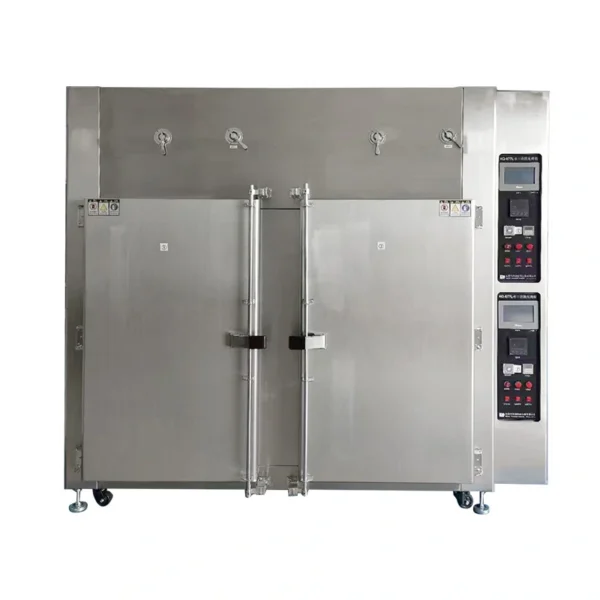
Industrial PTFE Sintering Ovens – High Temp Teflon Sintering Furnace
Our industrial PTFE Sintering Ovens are engineered for superior processing of Teflon™ and other fluoropolymers. This high temperature sintering oven ensures exceptional temperature uniformity for consistent, high-quality results every time.
Built for reliability and efficiency, it’s the ideal solution for demanding industrial applications, reducing cycle times and minimizing defects.
Stories from the Shop Floor: How These Ovens Changed the Game
Let’s get real with some tales—no names, but trust me, they’re legit.
Take “Factory A,” a Midwest maker of PTFE tubes for lab gear. They were batching 200kg loads in a clunky old oven, hitting 15% rejects from edge curling. Switched to a vertical sinter unit like ours—ramped precisely to 365°C, held 3 hours. Yield jumped to 92%, and they shaved two hours off cycles. Now they’re eyeing expansion, all because the oven let ’em scale without chaos.
Or “Shop B” down south, specializing in rods for seals. Warping was killing ’em—rods bowing under heat. We tweaked their setup: Mandrel fixtures, better airflow. Post-install, density hit 2.15 g/cm³ consistently (PTFE’s target, per DuPont specs). Saved ’em $15k in scrap last quarter alone.
These aren’t fairy tales. PTFE’s in everything from wiring insulation (Coating Systems cites it for aerospace) to fluidic assemblies (Adtech’s case on transparent tubes). Your setup could be next—drop a line via our contact page to brainstorm.
Keeping Your Oven Humming: Maintenance That Matters
Longevity’s key. Treat your sintering oven right, and it’ll outlast bad hires.
Daily: Wipe down interiors—PTFE dust builds up, clogs vents.
Weekly: Check thermocouples. Off by 5°C? Recalibrate.
Monthly: Inspect seals and doors for leaks. Hot air escape means inefficiency.
Yearly: Full service—elements, fans, controls. We’ve got guides on our site, but pros like our team at Teflon Machinery handle it seamless.
One overlooked bit: Log every run. Track temps, times, yields. Spots trends early—like if your 380°C hold’s pushing decomposition (watch for yellowing).
With this, expect 10+ years from a quality unit. Worth it when PTFE demand’s climbing 4.3% yearly.
Wrapping It Up: Time to Level Up Your PTFE Game
We’ve covered a lot— from why Sintering Ovens for PTFE Rods, Sheets, Tubes are your secret weapon, to the steps, picks, pitfalls, and proof in the pudding. It’s not about perfection; it’s about consistent, headache-free production that grows your shop.
Imagine batches coming out spot-on, clients raving, and you actually sleeping at night. That’s the desire, right? We’ve helped dozens get there with our gear.
Ready to make it real? Swing by Teflon Machinery for more deets, snag a quote, or just shoot questions to info@teflonmachinery.com. Our contact form is quick—let’s chat your setup. What’s one tweak you’d try first?
FAQ: Quick Hits on Sintering Ovens for PTFE
What’s the ideal sintering temp for PTFE rods versus sheets?
Rods and sheets both hit 360-380°C, but rods might need a tad longer hold—3-4 hours for thicker ones—to fight sagging. Sheets? 2-3 hours suffices if weighted right. Always ramp slow, though.
How do I know if my oven’s airflow is up to snuff?
Blow a feather test—should drift even across the chamber. Or invest in anemometers for pros. Uneven flow’s behind most warping I’ve seen.
Can I sinter different shapes in one oven run?
Totally, with modular racks. Rods vertical, sheets horizontal, tubes supported. Just zone the load to avoid cross-contamination in heat.
What’s the biggest ROI from upgrading my sintering oven?
Hands down, scrap reduction— from 20% to under 5%. Plus faster cycles mean more throughput. One client doubled output without extra space.