Have you ever encountered this frustrating problem: after purchasing a new PTFE ram extruder machine, you discover persistent black spots on the surface or inside the tubes? Even after hours of debugging, the issue remains, leading to order delays and a loss of customer trust.
At Teflon Machinery, we believe the “black spot” issue is not simply a visual defect, but a systemic contamination or process control failure within your PTFE ram extruder setup.
What Causes Black Spots in PTFE Production?
To solve the problem, you must first understand the material nature of these stains. Generally, they fall into three categories:
Category 1: Thermal Degradation & Carbonization
This is the most common cause in a PTFE ram extruder. Under high temperatures or “dead zone” conditions, the resin or lubricants break down.
Mechanism: Molecular chain breakage leads to carbonized or dark coking products.
Characteristics: Dark black or brownish-black irregular shapes that appear suddenly after a temperature rise or machine shutdown.
Category 2: Foreign Object Contamination
This indicates that your PTFE ram extruder is not operating in a “clean system.”
Old Material Scale: Residual material from previous runs.
Environmental Dust: Fibers and dust from the workshop.
Metal Shavings: The most critical issue, often caused by friction between the machine parts.
Category 3: Raw Material Impurities
Sometimes the issue originates from the PTFE powder or additives themselves, such as natural impurities in fillers (glass fiber/carbon) or catalyst residues.
Two Major Reasons Your PTFE Ram Extruder is Producing Stains
1. Poor Concentricity & Mechanical Friction
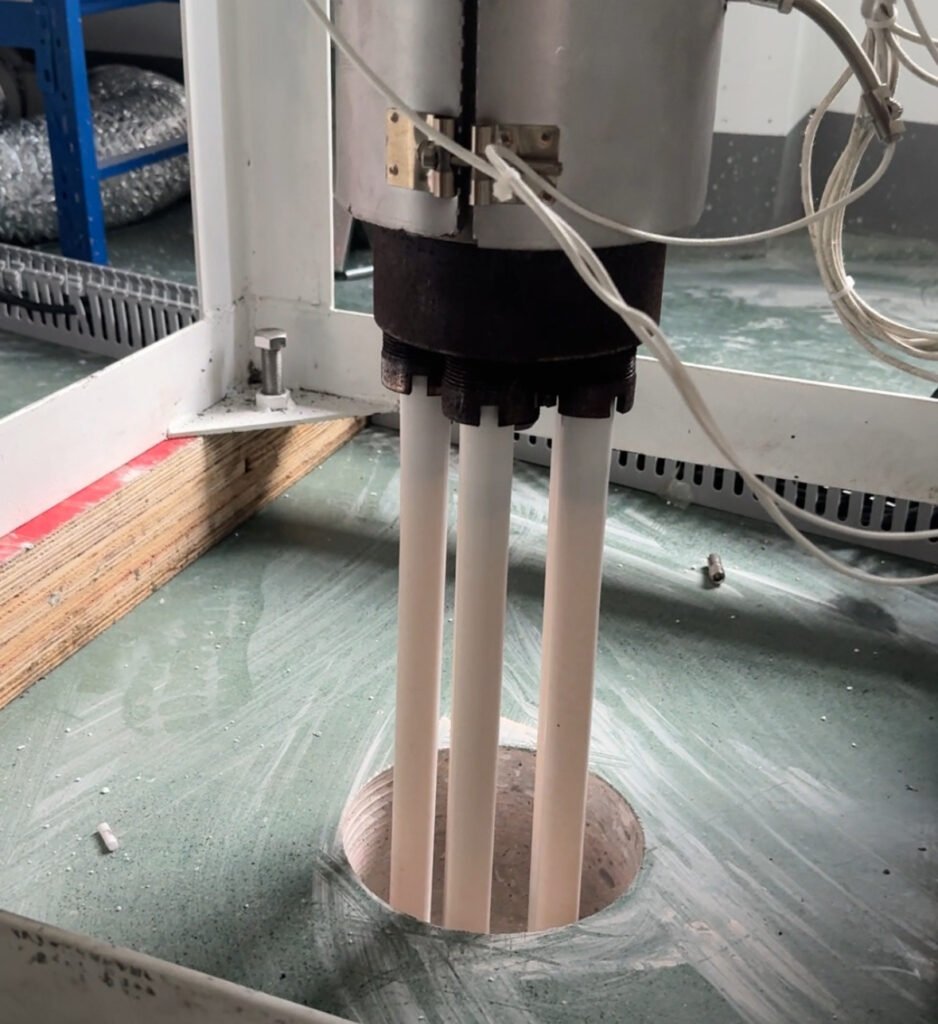
The core of PTFE ram extruder technology is the pusher head moving back and forth into a high-temperature mold. If the machine’s concentricity is imprecise:
The pusher head rubs against the mold wall.
Metal shavings are continuously generated and embedded into the PTFE pipe.
Case Study: An Australian client once bought a machine from another supplier and faced this. Our analysis showed the black spots were magnetic—proving the machine was literally “eating itself” due to poor manufacturing accuracy.
2. Improper Process Control
If the set temperature is too high or the holding time is incorrect, the PTFE material will degrade. Choosing a high-quality PTFE ram extruder is only half the battle; you also need the correct “production recipe.”
How to Eliminate Black Spots for Good?
Check Concentricity: Ensure your PTFE ram extruder is manufactured with high-precision components to prevent metal-on-metal friction.
The Magnet Test: Check if the black spots are magnetic. If they are, your machine needs mechanical adjustment immediately.
Optimize Temperature: Use a PLC-controlled system for precise heat management to avoid carbonization and learn advanced PTFE production process technology.
The Teflon Machinery Guarantee: Our equipment is built in our own precision machining workshop. We are so confident in our PTFE ram extruder stability that if you see any black spots during equipment acceptance, we will refund your deposit.
FAQ: PTFE Ram Extrusion Troubleshooting
Q: Can I reuse PTFE material that has black spots? A: We do not recommend it for high-end applications as it indicates carbonization or metal contamination, which weakens the dielectric properties.
Q: How often should I clean the PTFE ram extruder mold? A: It depends on your additives, but a deep clean is recommended whenever switching material batches to prevent “dead zone” buildup.
Q: How should I clean the PTFE ram extruder mold? A: Carefully scrub the inside of the mold using a copper steel wool pad.