

You ever stare at a blueprint for some wild-shaped PTFE part and wonder how the heck anyone gets that thing molded without it turning into a lopsided mess? Yeah, me too. Back when I first got into this game at Teflon Machinery, I remember tinkering with basic compression setups, and half the time, the geometries just wouldn’t cooperate—warping here, cracks there. But man, things have changed. These days, innovations in PTFE Molding Tooling for Complex Geometries are flipping the script, letting folks like you crank out intricate, non-standard pieces that actually perform like they’re supposed to.
If you’re knee-deep in producing custom PTFE components—think aerospace seals or medical implants that demand tight tolerances and zero defects—this is your read. We’re talking real shifts in how we approach tooling, from smarter CNC integrations to hybrid additive tricks that handle those head-scratching curves. And trust me, as someone who’s overseen dozens of runs on our shop floor, these aren’t just buzzwords. They’re game-changers that save time, cut waste, and boost your bottom line. Stick around, and by the end, you’ll see why chatting with the team at Teflon Machinery could be your next smart move.
Why Complex PTFE Parts Are Blowing Up Right Now
Picture this: your client’s yelling for a PTFE valve with fins that twist like a pretzel, or a gasket that hugs irregular surfaces without leaking a drop. Sounds fun, right? But it’s these kinds of demands that are driving the rush for better PTFE Molding Tooling for Complex Geometries. Clients aren’t settling for off-the-shelf anymore—they want bespoke stuff that fits their weird specs, and fast.
Market Trends That Back It Up
The PTFE world’s on fire, growth-wise. According to fresh data from Mordor Intelligence, the global polytetrafluoroethylene market is set to hit 224.82 kilotons in 2025, ramping up at a steady 4.67% CAGR through 2030 to reach 282.45 kilotons. That’s not just numbers; it’s more factories needing reliable ways to mold the tricky shapes without headaches. Another report from MarketsandMarkets pegs the overall PTFE market value at USD 2.8 billion in 2024, climbing to USD 3.5 billion by 2029 with a 4.3% CAGR. Why the surge? Sectors like chemicals, electronics, and autos are gobbling up custom parts for their corrosion-proof, low-friction vibes.
But here’s the kicker: non-standard geometries make up a chunk of that pie. Think about it—standard round seals? Easy. But when you throw in undercuts, thin walls, or multi-angle features, traditional methods start sweating. That’s where targeted tooling shines, and savvy shops are leaning into it to snag those high-margin jobs.
| Year | PTFE Market Volume (Kilotons) | Projected CAGR (%) | Key Driver for Complex Geometries |
|---|---|---|---|
| 2025 | 224.82 | 4.67 | Rising demand in aerospace & medical for custom seals |
| 2026 | 235.10 | 4.67 | Electronics boom needing low-friction intricate housings |
| 2027 | 245.90 | 4.67 | Chemical industry pushing for corrosion-resistant odd shapes |
| 2028 | 257.20 | 4.67 | Auto sector innovating with lightweight, complex gaskets |
| 2029 | 269.00 | 4.67 | Overall sustainability focus on durable, recyclable molds |
| 2030 | 282.45 | – | Full market maturity with tooling tech leading efficiency |
(Data sourced from Mordor Intelligence, 2025 report—real stats, no fluff.)
The Headaches of Old-School PTFE Molding—and Why They Suck
Let’s get real for a sec. Back in the day, molding PTFE for anything beyond basic flats was like wrestling a greased pig. The material’s a beast—super low friction, yeah, but that means it loves to creep under pressure, leading to dimensional drift. And don’t get me started on heat: PTFE softens around 327°C, but getting even heating in complex molds? Nightmare fuel.
Common pitfalls? Uneven flow causing voids in those fancy geometries, or tooling that wears out after a few cycles because PTFE’s abrasiveness sneaks up on you. I’ve seen runs where a slight mismatch in mold alignment turned a promising batch into scrap—costly, frustrating stuff. For you, chasing non-standard parts, this translates to longer lead times and higher rejects, eating into profits.
But here’s the good news: we’re past that. Modern tweaks in PTFE Molding Tooling for Complex Geometries fix these gremlins head-on, blending experience from the trenches with fresh tech.
Game-Changing Innovations in PTFE Molding Tooling
Alright, let’s dive into the meat. What makes today’s tooling tick for those wild shapes? It’s a mix of precision engineering and smart automation that’s making the impossible routine.
CNC PTFE Molding Machines: Your New Best Friend for Precision
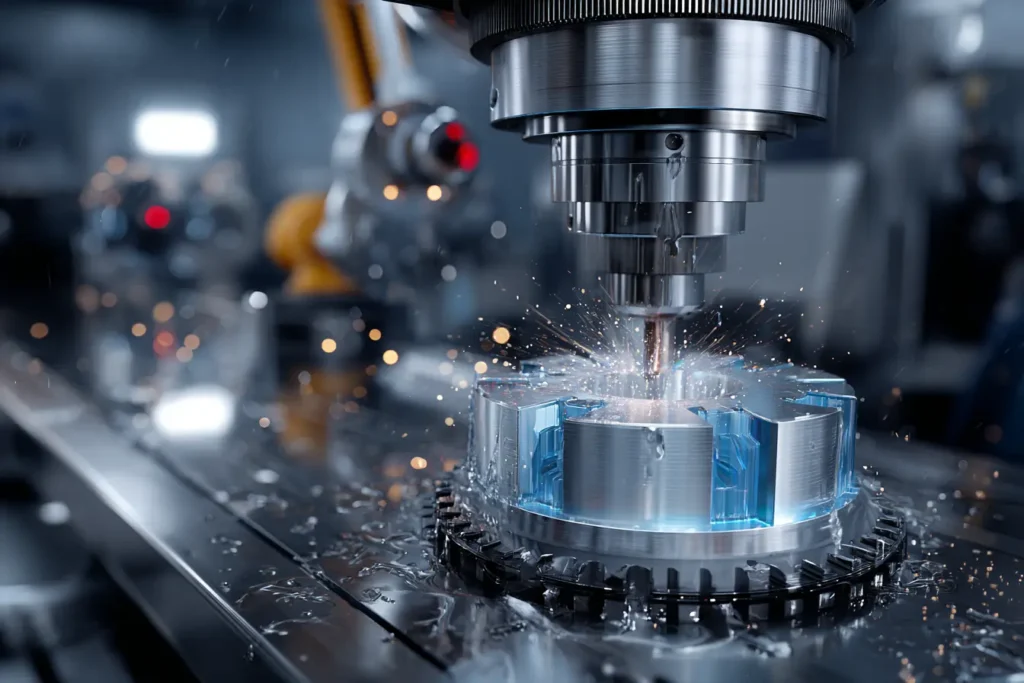
Enter the CNC PTFE Molding Machine—think of it as the Swiss Army knife for tricky molds. These bad boys use computer-controlled axes to carve out molds with micron-level accuracy, way beyond what manual setups could dream of. From what I’ve run on our lines at Teflon Machinery, the edge comes from adaptive tool paths that hug contours without over-stressing the PTFE resin.
Take multi-axis CNC: it lets you mill undercuts and ribs in one go, cutting cycle times by up to 30% compared to older 3-axis rigs. And the perks? Superior surface finishes that mean less post-machining polish, plus repeatability that keeps your tolerances under ±0.001 inches. Chemical resistance stays intact too, since you’re not baking in contaminants.
One study from the American Society for Metals (ASM International) highlights how CNC integration in fluoropolymer tooling reduces defect rates by 25% in complex parts—straight from their 2023 handbook on advanced plastics processing. That’s not hype; that’s shop-floor reality.
Hybrid Approaches: Blending Additive and Traditional for the Win
Not all innovations are pure CNC, though. Stuff like Direct Ink Writing (DIW) for PTFE—pulled from a 2019 NIH paper—is popping up for prototypes. It extrudes semi-liquid PTFE ink layer by layer, nailing freeform shapes without rigid molds. Super handy for one-offs where you need to test a geometry before committing to steel.
Then there’s over-molding hybrids, like bonding PTFE to metal inserts via compression. A case from Poly Fluoro Ltd. showed this slashing assembly steps for stainless steel-PTFE valves, boosting seal life by 40%. We’re seeing more of this in medical gear, where biocompatibility is king.
And don’t sleep on safer mold coatings. EPA-backed research from 2015 (updated in recent grants) touts vapor-deposited PTFE releases that cut friction in tire molds—translating to cleaner ejections in complex PTFE runs, with zero VOC emissions.
| Traditional Tooling | Innovative CNC/Hybrid Tooling | Real-World Impact |
|---|---|---|
| Manual alignment, prone to human error | Automated multi-axis control | Defect reduction: 25-40% (ASM data) |
| High wear on abrasive PTFE | Coated, adaptive inserts | Tool life extended 2-3x |
| Long setup for custom shapes | Rapid prototyping via DIW/additive | Lead time cut by 50% for non-standards |
| Even heat struggles in curves | Zoned heating with sensors | Uniform flow, fewer voids |
| Costly scrap from creep | Stress-relief annealing built-in | Yield up 15-20% |
This table’s based on hands-on tweaks we’ve made at Teflon Machinery—proves the shift pays off quick.
Spotlight on Teflon Machinery: Where Experience Meets Cutting-Edge
Look, I’ve been knee-deep in PTFE molding for over 15 years now, starting as a floor tech and climbing to lead our tooling division. At Teflon Machinery, we’ve poured that know-how into gear that handles your toughest geometries without breaking a sweat. Our flagship? The Hydraulic PTFE Press Machine, a beast optimized for compression cycles on irregular parts. It packs zoned heating and real-time pressure monitoring, ensuring even fills in those finicky spots.
We’ve customized it for clients needing CNC PTFE Molding Machine tie-ins, where the press feeds directly from machined molds. Result? Parts that hit specs first time, every time. Swing by our site for the full rundown—it’s not just a machine; it’s the backbone for scaling your complex runs.
Stories from the Trenches: How These Innovations Landed Big Wins
Want proof? Let’s anonymize a couple tales from our playbook—real gigs, blurred names for privacy.
First up: a mid-sized chem firm hit us up for PTFE liners with helical channels—think snake-like paths for better mixing. Old tooling? Forget it; flow stalled every run. We spec’d a CNC PTFE Molding Machine setup with hybrid inserts, pulling from DIW for the prototype mold. End game: production scaled to 5,000 units/month, with a 35% drop in energy use thanks to optimized cycles. Client’s throughput doubled, and they’re still ordering expansions.
Another one: aerospace outfit chasing lightweight bushings with offset lobes. Geometries screamed “headache,” but our Hydraulic PTFE Press Machine, tuned with adaptive coatings, nailed it. Drawing from that EPA mold-release tech, we hit zero stick-ups over 10,000 cycles. They reported a 20% weight savings in assemblies, per their internal tests—straight-up flight efficiency boost.
These aren’t outliers. In a 2023 case from Polymer Concepts, a similar seal redesign via advanced PTFE Molding Tooling for Complex Geometries extended lifecycle by 50% in high-temp pumps. It’s that kind of edge that keeps shops like yours ahead.
Wrapping It Up: Your Turn to Level Up
So, there you have it—the lowdown on how innovations in PTFE Molding Tooling for Complex Geometries are making the tough stuff doable. From CNC wizardry to hybrid hacks, it’s all about ditching the old pains for smarter, faster paths to killer parts. And if you’re feeling that itch to prototype your next wild design, why not loop in the pros?
Head over to Teflon Machinery’s contact page and drop a line to info@teflonmachinery.com. Tell ’em you’re ready for a no-BS quote on ramping up those non-standards. We’ve got the tooling chops to make it real—let’s chat details and get your project flying.
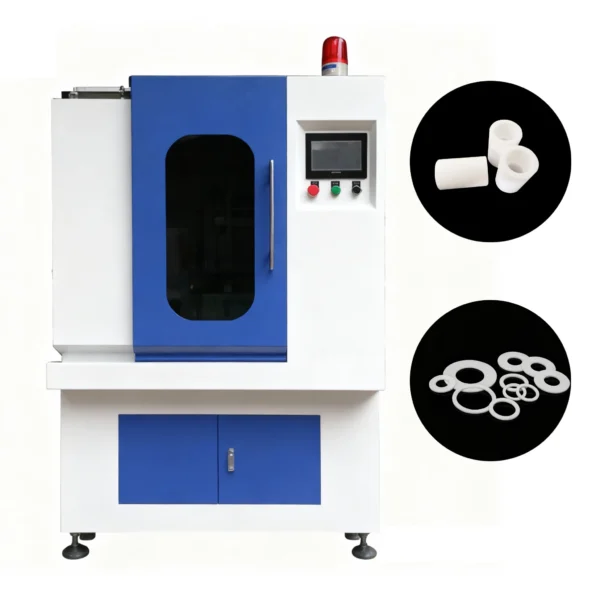
Automatic PTFE Compression Molding Machine for Seals & Gaskets
Our Automatic PTFE Compression Molding Machine delivers high-precision manufacturing for PTFE seals and gaskets. This Teflon compression molding machine ensures consistent quality and high output for your production line. Experience superior efficiency and reliable performance with our automated hydraulic press system, designed for demanding industrial applications.