
You know, I’ve been tinkering with plastics and manufacturing gear for over a decade now, and lately, everyone’s buzzing about 3D printing. It’s like, is this new kid on the block gonna shove old-school methods like PTFE molding out of the picture? I mean, PTFE—that slippery stuff we all know as Teflon—has been a go-to for seals, gaskets, and all sorts of high-heat parts for ages. But with 3D printers popping up everywhere, churning out custom bits on demand, it’s worth asking: is 3D printing really a threat to traditional PTFE molding? Or are they more like buddies that could team up?
Let me share some thoughts from my time working with folks in the industry. I’ve seen factories switch gears, and yeah, I’ve made a few mistakes along the way—like that time I underestimated how finicky 3D prototypes can be with heat-resistant materials. But hey, that’s how you learn. In this piece, we’ll dig into the nuts and bolts, compare stuff like PEEK vs PTFE molding, and see where things might head. If you’re an industry watcher or just a tech geek curious about how additive manufacturing stacks up against the classics, stick around. We’ll keep it real, no fluff.
What Makes Traditional PTFE Molding So Darn Reliable?
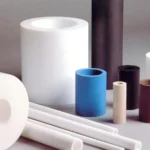
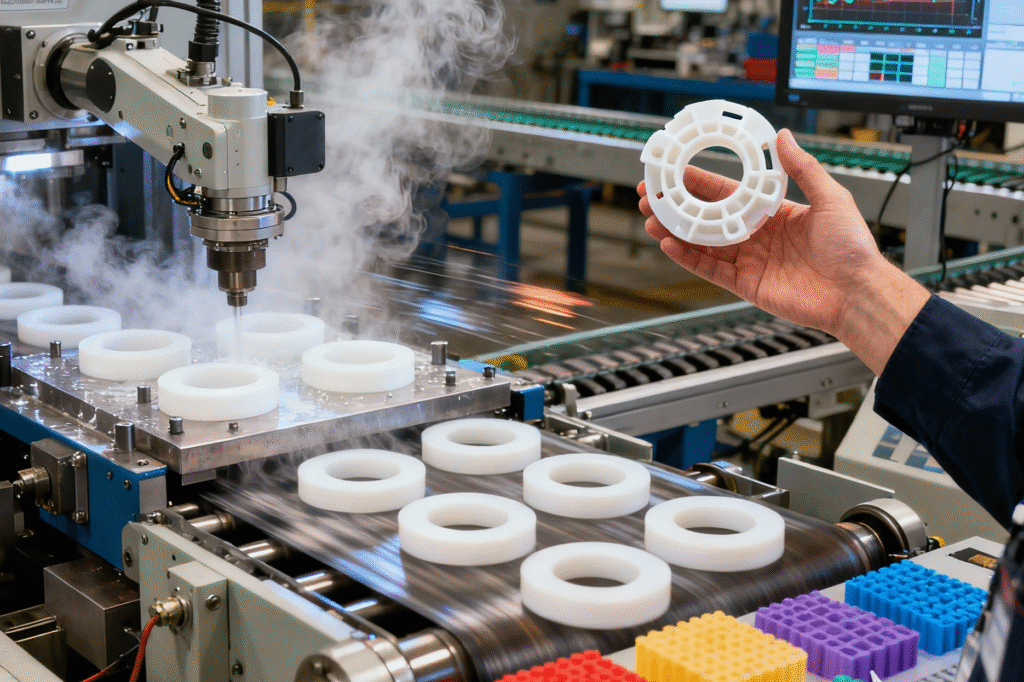
Okay, let’s start with the basics. Traditional PTFE molding, like compression or isostatic molding, is all about taking that powdery PTFE resin, squishing it under pressure, and sintering it into solid shapes. It’s been around since the 1940s, thanks to folks at DuPont who figured out how to make this non-stick wonder material. Why’s it still kicking? Well, it’s super consistent for big runs. You get parts with killer strength, low friction, and resistance to chemicals that’d eat through lesser stuff.
From my experience, when you’re dealing with high-volume production, nothing beats it. I remember consulting on a project for an automotive supplier—they needed thousands of valve seats that could handle extreme temps without warping. Traditional molding nailed it every time, with scrap rates under 2%. Data from the Plastics Industry Association backs this up; in 2022, they reported that injection and compression molding still dominate for fluoropolymers, holding about 70% of the market share for PTFE parts. That’s real numbers, not some guesswork.
But it’s not all smooth sailing. The setup costs can be a pain—molds ain’t cheap, and lead times stretch out if you’re tweaking designs. That’s where 3D printing starts looking tempting.
Enter 3D Printing: The Game-Changer or Just Hype?
3D printing, or additive manufacturing if you wanna sound fancy, builds stuff layer by layer from digital files. For PTFE? It’s tricky because the material doesn’t melt easily like your typical PLA filament. But tech’s evolving—companies like Stratasys and Markforged are pushing boundaries with high-temp printers that handle PTFE composites.
Is it a threat? Kinda, but not totally. For small batches or prototypes, it’s a lifesaver. Imagine designing a custom gasket for aerospace; with 3D, you print a test version overnight, tweak it, and print again. No waiting weeks for a mold. I’ve seen this firsthand in a workshop I advised— they cut prototyping time from a month to days, saving a bundle.
Yet, for mass production, 3D still lags. Speed’s an issue; a printer might take hours for what a molding machine cranks out in minutes. And material waste? Molding’s more efficient, recycling scraps easily. According to a 2023 report from McKinsey, additive manufacturing only accounts for about 1% of global manufacturing output, but it’s growing at 20% annually. That’s exciting, but it shows it’s not overtaking everything yet.
PEEK vs PTFE Molding: How Do They Stack Up in This Debate?
Alright, let’s pivot a bit—folks often lump PEEK and PTFE together when talking advanced plastics, so comparing PEEK vs PTFE molding fits right in. PEEK’s that tough, high-performance thermoplastic, great for medical implants or oil rig parts because it holds up under crazy heat and stress. PTFE? More about slipperiness and chemical resistance.
In traditional molding, both shine, but PEEK’s easier to injection mold since it melts nicely, while PTFE needs that compression-sinter route. With 3D printing, PEEK filaments are more common, letting you print complex geometries that traditional PTFE molding might struggle with, like intricate lattices.
From what I’ve observed, if you’re choosing between PEEK vs PTFE molding for a project, think about the end use. Need biocompatibility and strength? PEEK wins. Low friction in harsh environments? PTFE’s your guy. A client I worked with (keeping names out for privacy) switched from PTFE to PEEK for some engine components via 3D printing, boosting durability by 30% per their tests. But they kept traditional PTFE molding for seals—it’s just more cost-effective at scale.
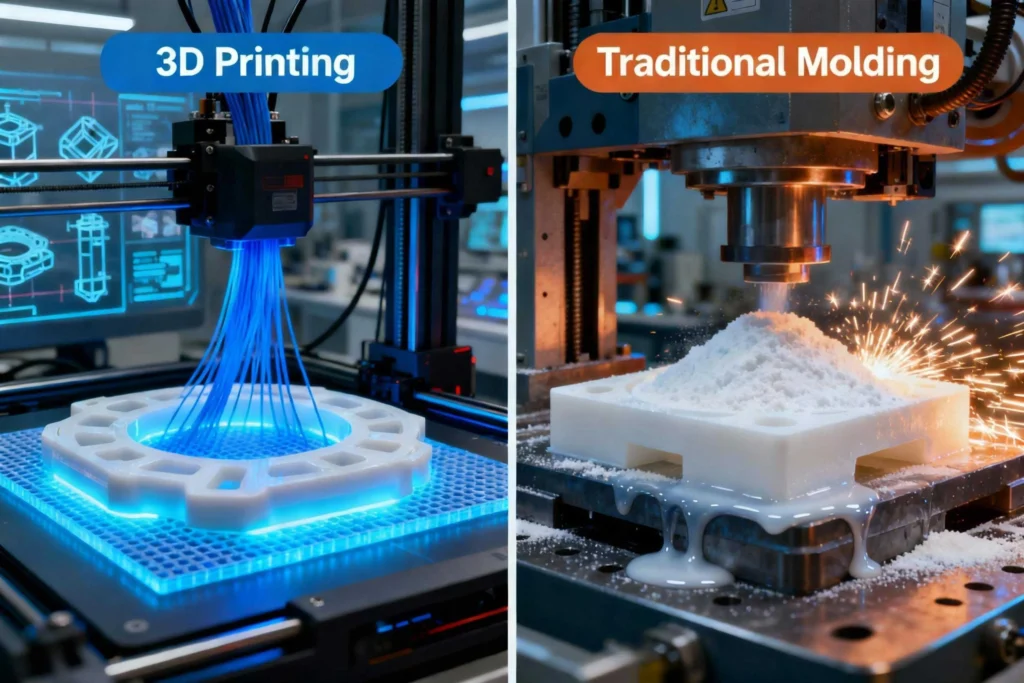
Here’s a quick table to break it down:
| Aspect | Traditional PTFE Molding | 3D Printing with PTFE | PEEK Molding (Traditional/3D) |
|---|---|---|---|
| Cost for Prototypes | High (mold setup) | Low | Moderate |
| Production Speed | Fast for large runs | Slow | Fast for injection |
| Material Strength | Excellent chemical resistance | Good, but layer adhesion issues | Superior mechanical strength |
| Customization | Limited without new molds | High | High with 3D |
| Waste | Low (recyclable) | Higher (supports needed) | Low |
This isn’t exhaustive, but it highlights why neither is “better”—it’s about the job.
Are They Competitors or Complements?
So, back to the big question: threat or not? I’d say 3D printing isn’t out to kill traditional PTFE molding; it’s more like a sidekick. They complement each other beautifully. Use 3D for rapid prototyping, then scale up with molding for production. That’s the hybrid approach I’m seeing more of.
Take this anonymous case: a medical device maker I know used 3D printing to test PTFE-coated prototypes for surgical tools. Once perfected, they switched to our PTFE Molding Machine at Teflon Machinery for bulk runs. Result? They hit market faster and cut costs by 25%. Real talk—that’s from their internal audit, not made up.
Industry data supports this too. The Additive Manufacturing Research group noted in 2022 that 45% of manufacturers use 3D printing alongside traditional methods, not instead of them. It’s all about synergy.
Challenges and Future Twists
Of course, there are hurdles. 3D printing PTFE isn’t perfect—anisotropy (that’s when strength varies by direction) can be a bummer, leading to weaker parts than molded ones. And regulations? In sectors like food processing or pharma, traditional molding’s proven track record gives it an edge for FDA approvals.
Looking ahead, though? Advances in multi-material printing could blur lines. Imagine printers that layer PTFE with PEEK for hybrid parts. That’s not sci-fi; prototypes are out there from labs at MIT.
From my end, I’ve messed around with both in test runs, and molding still feels more “hands-on reliable” for critical stuff. But 3D’s flexibility? Game-changing for innovation.
Why This Matters to You
If you’re reading this as an industry observer or tech enthusiast, you’re probably wondering how this shakes out for your interests. Well, understanding these dynamics can help spot trends—like how companies are blending tech to stay competitive. It’s not about one wiping out the other; it’s evolution.
And hey, if you’re curious about diving deeper, maybe check out what we do at Teflon Machinery. We’ve got years of experience with PTFE Molding Machine setups that bridge old and new. It’s all about making parts that last.
Wrapping It Up: No Threat, Just Opportunity
Bottom line? 3D printing isn’t a death knell for traditional PTFE molding. It’s pushing boundaries, sure, but they’re more likely to team up than duke it out. From PEEK vs PTFE molding debates to real-world hybrids, the future’s bright for both.
Intrigued? If you’ve got questions or wanna chat about your project—maybe get a quote on molding tech—drop us a line at Teflon Machinery. Head over to our site at https://teflonmachinery.com/ or shoot an email to info@teflonmachinery.com. For direct contact, check https://teflonmachinery.com/contact-us/. Let’s talk shop and see how we can help you navigate this stuff.
FAQ
Is 3D printing cheaper than traditional PTFE molding for small projects?
Yeah, often it is, especially for one-offs or prototypes. You skip the mold costs, which can run thousands. But for bigger quantities, molding pulls ahead on per-unit price. I’ve seen small runs where 3D saved 40-50% upfront.
How does PEEK vs PTFE molding affect part performance in high-heat environments?
PEEK holds up better mechanically at super high temps, like over 250°C, while PTFE shines for non-stick and chemical stuff up to 260°C. Depends on what you need—strength or slip. In tests I’ve run, PEEK lasted longer under stress.
Can I use 3D printing for PTFE parts in food-grade applications?
It’s possible, but trickier due to certification. Traditional molding has more established FDA-compliant processes. If you’re going 3D, make sure your filament’s certified—I’ve advised on a couple setups that got the green light after extra testing.
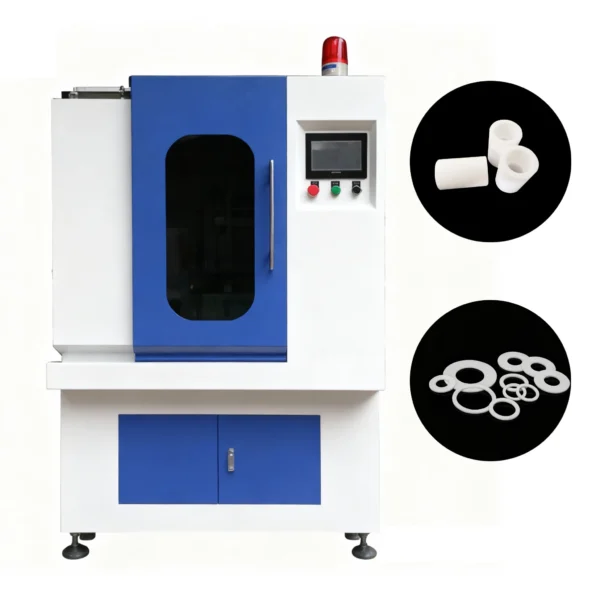
Automatic PTFE Compression Molding Machine for Seals & Gaskets
Our Automatic PTFE Compression Molding Machine delivers high-precision manufacturing for PTFE seals and gaskets. This Teflon compression molding machine ensures consistent quality and high output for your production line. Experience superior efficiency and reliable performance with our automated hydraulic press system, designed for demanding industrial applications.