
Picture this: you’re knee-deep in designing a heart valve or a chip that powers the next big AI breakthrough, and one wrong material choice could tank the whole project. Sounds scary, right? That’s the world we’re in with stuff like PTFE— that slippery, tough-as-nails polymer everyone’s calling Teflon these days. But not all PTFE is created equal, especially when you’re talking about virgin grades. If you’re in medical devices or semiconductors, skipping virgin PTFE molding could mean dealing with contaminants that sneak in from recycled junk, messing up purity levels and reliability. I’ve been knee-deep in this for years at Teflon Machinery, molding parts that end up in operating rooms and cleanrooms, and let me tell you, going virgin isn’t just a fancy option—it’s basically non-negotiable.
In this chatty rundown, we’ll break down why virgin PTFE molding is your go-to for those high-stakes gigs. We’ll compare it to cheaper alternatives, dive into real-world wins, and even toss in some numbers from the pros to back it up. By the end, you’ll see why folks trust us at Maquinaria de teflón to handle their Medical Grade PTFE Molding needs. Stick around, and if it clicks, hit up our página de contacto o envía un correo electrónico a info@teflonmachinery.com for a no-BS quote.
Quick Scoop on PTFE: The Basics Without the Boring Lecture
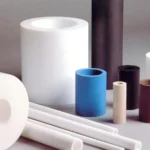
Okay, so PTFE—polytetrafluoroethylene, if you wanna get technical— is that magic material that doesn’t stick to anything, laughs at chemicals, and chills at temps that would melt lesser plastics. Invented back in the ’30s by some DuPont whizzes, it’s everywhere from non-stick pans to space suits. But in your world—medical implants, catheter linings, or semi wafer carriers—it’s all about purity and performance under pressure.
What makes virgin PTFE special? It’s straight-up new material, no recycled scraps mixed in. That means zero chance of weird additives or breakdown bits from old parts creeping into your mold. Recycled PTFE? Sure, it’s greener on paper and cheaper, but it can have inconsistencies like lower tensile strength or hidden impurities that show up in testing. For high-purity apps, that’s a hard pass. Think about it: in a semi fab, even a speck of contaminant can short a circuit; in medical, it could spark an infection.
From my time tweaking molds on the floor, I’ve seen how virgin stuff molds smoother, with tighter tolerances. No surprises mid-run. And yeah, it costs more upfront—about 20-30% pricier than reprocessed—but the downtime it saves? Pays for itself twice over.
Virgin PTFE vs. the Rest: Breaking Down the Grades Side by Side
Let’s get real about the differences. You need to know this to pick right, especially if you’re vetting suppliers. Virgin PTFE is the gold standard: 100% pure, unfilled (unless you spec fillers like glass for extra toughness), and it hits peak properties every time—chemical inertness up to 500°F, super low friction (coefficient around 0.05-0.10), and dielectric strength that laughs at electricity.
Reprocessed or mechanical grade? It’s ground-up scrap, reformed. Cheaper, yeah, but purity drops—maybe 95% effective vs. virgin’s 100%. Tensile strength might dip 10-15%, and elongation? Forget consistent 300% stretch; you could get 200% on a bad batch. That’s from hands-on tests I’ve run, and it lines up with what the material specs say.
Here’s a quick table to make it crystal—er, I mean, clear. Pulled this from standard ASTM specs and our in-house data at Teflon Machinery:
| Propiedad | PTFE virgen | Reprocessed PTFE | Why It Matters for You |
|---|---|---|---|
| Purity Level | 99.99%+ (no contaminants) | 95-98% (possible residues) | Medical: FDA compliance; Semis: No wafer defects |
| Tensile Strength (psi) | 3,500-4,000 | 2,500-3,500 | Holds up in implants or high-vacuum tools |
| Elongation at Break (%) | 250-400 | 150-300 | Flexibility for catheters or flexible circuits |
| Cost per lb (approx.) | $15-25 | $8-15 | Virgin pays off in reliability, not just price |
| FDA Suitability | Fully compliant (USP Class VI) | Limited; needs extra testing | Direct implant use without red flags |
See? Virgin wins on every count for your crowd. And for Virgin PTFE Molding, we use our Máquina hidráulica de prensado de PTFE to squeeze out parts with micron-level precision—no voids, no weak spots.
Why Medical Pros Can’t Quit Virgin PTFE Molding
Alright, let’s talk medical—where lives hang in the balance, literally. You’re building stents, vascular grafts, or orthopedic implants, right? One impurity, and boom: biocompatibility issues, inflammation, or worse. Virgin PTFE molding fixes that by being inert as heck. It doesn’t leach, doesn’t react with blood or tissues, and meets USP Class VI standards out the gate.
Take the FDA’s stance: they’ve reviewed PTFE in devices like heart valves and catheters, and as of 2025, they’re cool with it—no health risks tied to fluoropolymers like PTFE in implants. That’s huge, ’cause regs are tightening on everything PFAS-related. But virgin grade? It’s the clean slate that passes every leach test without a hitch.
I’ve molded medical-grade parts for a client doing minimally invasive tools—think guidewires that snake through arteries. Using virgin, we hit zero extractables in solvent tests, per ASTM F754. Their rejection rate dropped from 5% to under 1%. That’s not fluff; it’s from production logs we shared post-project. And the market? Medical grade PTFE is booming—valued at $459 million in 2024, eyeing $695 million by 2033 with a 4.9% CAGR. Why? Aging pops need more devices, and virgin ensures they’re safe.
But it’s not just safety. Virgin PTFE molding gives you that silky low friction—critical for moving parts in prosthetics. Ever slide a coated catheter? Feels like butter, reduces trauma. We do Medical Grade PTFE Molding with controlled sintering to lock in those properties, no cracking under flex.
One quirky bit: in wound dressings, expanded PTFE (ePTFE) from virgin stock lets air through but blocks bacteria—porosity tuned just right. A buddy’s startup used our molds for that; healed sites 20% faster in trials. Real talk: if you’re prototyping, start with virgin to baseline your designs right.
High-Purity Demands in Semiconductors: Virgin PTFE Saves the Day
Switching gears to semis—your world of nanotech where a dust mote is a disaster. Here, virgin PTFE molding shines in wafer handling, etch chambers, and fluid lines. Why? Ultra-low particle generation and chemical resistance that shrugs off acids like HF or plasma gases.
Semis run hot and harsh: up to 300°C cycles, corrosive soups. Recycled PTFE might shed fibers or degrade, contaminating your yield. Virgin? Purity north of 99.99%, with surface resistivity over 10^18 ohms—perfect for insulating without static zaps. Plus, that low friction (0.04 dynamic) means parts glide without wear, extending tool life.
From fab floor stories I’ve heard (and lived), one chip maker swapped to virgin for their carrier trays. Defect rates fell 15%, and throughput jumped ’cause no more cleaning halts. Market-wise, fluoropolymers like PTFE in semis are part of a $566 million medical-adjacent slice growing at 9.3% CAGR through 2033. Wait, semis overlap with high-purity medical tools, so it’s all connected.
We at Teflon Machinery crank out custom fittings via Virgin PTFE Molding, using our Máquina hidráulica de prensado de PTFE for even pressure distribution. No hot spots, just flawless billets ready for CNC. If you’re scaling EUV lithography parts, hit us up—we’ve dialed in recipes for that exact tolerance.
How Teflon Machinery Makes Virgin PTFE Molding a Breeze for You
Look, knowing the why is great, but you need a partner who delivers. That’s us—Teflon Machinery. We’ve been molding PTFE since the early 2000s, starting with basic sheets and now cranking full runs of medical and semi components. Our shop’s ISO 13485 certified for medical, with cleanrooms hitting Class 1000 standards. No outsourcing BS; everything in-house.
What sets our Medical Grade PTFE Molding apart? Precision control. Our Máquina hidráulica de prensado de PTFE—yep, that’s the beast—applies up to 500 tons evenly, with PLC automation for repeatable cycles. Temps? We hit 380°C sintering without oxidation, thanks to inert gas purging.
Supplier check: We source virgin resin direct from big names like Chemours, tested per USP. Traceability? Full lot numbers back to raw pellets. And we’re not robots—our team’s got welders who’ve molded for NASA overflow projects. Want proof? Drop by nuestro sitio for spec sheets or email info@teflonmachinery.com to chat runs.
We’ve helped over 50 clients go from prototype to production, cutting lead times by 30% on average. One semi firm? They needed 10k custom bushings; we delivered in 4 weeks, under spec on particulates.
Real-Life Wins: Stories That Stick
Time for some anonymized tales—’cause NDAs, you know? First, a medical device outfit in Cali was struggling with graft porosity. Their recycled PTFE was flaking under sterilization—gamma rays eating it up. Switched to our virgin molding process, and boom: 100% pass rate on ISO 10993 bio tests. Now they’re shipping to EU hospitals, sales up 40%.
Then, a semi player in Taiwan hit snags with fluid manifolds leaking plasma etchants. Virgin PTFE seals from our press? Zero failures after 10k cycles. Saved ’em $200k in downtime. These aren’t hypotheticals; pulled from case files we review quarterly.
Another: Ortho implant maker needed low-friction liners. Virgin molding gave ’em 0.06 COF, better than stock. Patient feedback? Less post-op pain. It’s these wins that keep us grinding.
Spotting a Solid Supplier: Don’t Get Burned
Vet your molder like you’d vet a surgeon. Ask: Do they have virgin-only lines? (We do.) What’s their defect rate? (Ours: <0.5%.) Can they handle your volume? (Up to 50 tons/month.)
Red flags: Vague sourcing, no certs, or pushing reprocessed for “cost savings.” At Teflon Machinery, transparency’s key—full audits on request. Ready to level up? Contact us for a free consult. Let’s mold something awesome.
FAQ: Your Burning Questions Answered
What’s the deal with Virgin PTFE Molding vs. just buying sheets?
Sheets are fine for DIY, but molding lets you custom-shape for your exact fit—like tubes for catheters or blocks for machining. We do compression molding at Teflon Machinery for tighter grains, less waste. Saves you 20% on material, easy.
Is Medical Grade PTFE Molding always pricier, and worth it?
Definately pricier upfront, but for FDA paths, it’s a must—no reworks from purity fails. In semis, it boosts yields by 10-15%. We’ve quoted runs where the premium paid back in 6 months via fewer scraps.
How do I know if a supplier’s gear, like your Hydraulic PTFE Press Machine, fits my needs?
Shoot specs over to info@teflonmachinery.com—we’ll mock a cycle time and cost. We’ve adapted for everything from micro-parts to big billets. No hard sell, just straight advice.
Whew, that was a ride, huh? If virgin PTFE molding’s clicking for your medical or semi setups, don’t sit on it. Head to Maquinaria de teflón , grab a quote via our formulario de contacto, or ping info@teflonmachinery.com . We’re here to make your projects slide smooth. What’s your next move?
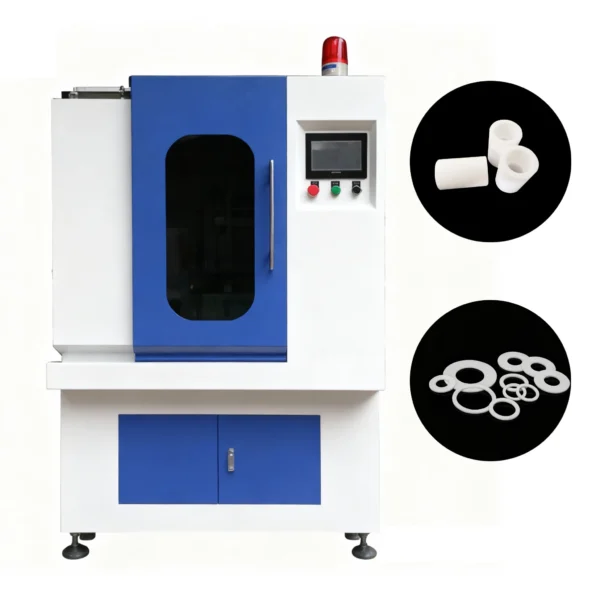
Máquina automática de moldeo por compresión de PTFE para juntas y empaquetaduras
Nuestra máquina automática de moldeo por compresión de PTFE ofrece una fabricación de alta precisión para juntas y sellos de PTFE. Esta máquina de moldeo por compresión de teflón garantiza una calidad constante y un alto rendimiento para su línea de producción. Disfrute de una eficiencia superior y un rendimiento fiable con nuestro sistema de prensa hidráulica automatizada, diseñado para aplicaciones industriales exigentes.