
You ever find yourself knee-deep in mold designs, scratching your head over which sintering oven setup will make your steel parts tough enough to handle the grind without breaking the bank? I get it— as a mold designer or procurement whiz, you’re juggling durability that doesn’t quit, heat that flows just right for even sintering, and costs that won’t sneak up on you later. That’s where this chat comes in. Over the years at Teflon Machinery, we’ve hooked up shops with PTFE Sintering Ovens that crank out reliable results for everything from intricate tool steels to heavy-duty molds. Today, let’s break down electric vs. gas-fired sintering ovens like we’re grabbing coffee and swapping shop stories. No fluff, just straight talk on what works for your facilty.
What Even Are Sintering Ovens, and Why Should Mold Folks Care?
Picture this: you’re working with powdered mold steels—think high-speed steels or those alloy blends that need to bond tight for killer wear resistance. Sintering’s the magic step where you heat ’em up below melting point, letting particles fuse into something solid and strong. It’s not just any heat; it’s controlled, even heat that boosts density without warping your geometry.
For you mold designers, this means parts with better thermal conductivity—heat zips through faster during injection runs, cutting cycle times. Procurement peeps? You’re eyeing the long game: ovens that deliver cost-effective runs without constant tweaks. According to the U.S. Department of Energy’s process heating guide, efficient sintering can slash energy use by up to 20% in metal fab shops, keeping your ops lean. We’ve seen it firsthand— one client switched ovens and watched their reject rates drop because the steel held shape better post-sinter.
Gas-fired and electric sintering ovens both get the job done, but they hit different notes. Gas ones roar with flames for quick ramps, while electrics hum steady for precision. Which one’s your jam? Depends on your volume, space, and that sweet spot of durability meets budget. Stick with me; we’ll unpack it all.
Electric Sintering Ovens: Steady Eddies for Precision Work
Alright, let’s start with the electric sintering oven crowd. These bad boys use resistance elements or induction to crank heat— no open flames, just clean, zoned warmth. I remember outfitting a mid-sized mold shop last year; their old setup was all over the place temp-wise, leading to soft spots in the steel. Switched to electric, and boom— uniform bonds every batch.
Durability: Built to Take a Beating, Day In, Day Out
Durability’s your first worry, right? Electric sintering ovens shine here because they’re simpler inside. No burners to clog or erode from fuel residue. Elements are tough— think molybdenum disilicide that laughs at 1800°F cycles. In our PTFE Sintering Ovens line at Teflon Machinery, we’ve engineered ’em with insulated chambers that hold up for 10+ years with basic maintenance. Real talk: a study from ASM International notes electric systems often outlast gas by 25% in high-cycle environments, thanks to fewer moving parts. For mold steels like P20 or H13, this means less downtime swapping corroded bits, keeping your production humming.
But hey, they’re not invincible. If you’re pushing max loads, those elements can fatigue faster than you’d like. Pro tip: space out your runs and check insulation yearly— it’ll pay off in steel that sinters crisp without cracks.
Heat Transfer: Even Flows for Flawless Mold Steel
Heat transfer’s where electrics really flex. They deliver pinpoint control, ramping slow or holding steady at, say, 360°C for PTFE-infused steels— perfect for avoiding thermal shocks that warp delicate molds. Convection fans whip air around for uniformity within 5°C across the chamber, per NREL’s heating efficiency benchmarks. Imagine sintering a batch of tool steel inserts; even heat means consistent grain growth, boosting conductivity by 15-20% over spotty setups.
We’ve tuned our electrics at Teflon Machinery for mold pros— think modular zones so you dial in hotter cores for faster diffusion. One designer we worked with said it cut their prototyping time in half, ’cause the steel bonded predictably every go.
Downside? They warm up slower than gas— maybe 30-45 minutes to peak vs. 15. If your shifts are short, that lag bites. But for quality-focused runs, it’s gold.
Operating Cost: The Wallet Watcher’s Guide
Now, operating cost— the big elephant. Electrics can sting upfront (we’re talking $50K-$150K installed, depending on size), but runtime? It varies wild with your electric rates. At $0.10/kWh, a mid-size unit might run $2-4 per hour, per DOE cost models. Cheaper in sunny spots with solar offsets, though.
Compare that to maintenance: low, since no gas lines to vent. Over five years, total ownership might edge out gas if energy’s stable. For procurement folks eyeing cost-benefit, factor in your local grid— if spikes hit, gas might win short-term. At Teflon Machinery, our electrics pack efficiency tweaks like recycled exhaust heat, dropping bills 10-15% on average.
Gas-Fired Sintering Ovens: Raw Power for High-Volume Hustle
Flip side: gas-fired sintering ovens. These use natural gas or propane burners for that fireball energy. Great for cranking volume, but they demand respect— ventilation, safety checks, the works. I once consulted a procurement team ditching electrics for gas; their throughput jumped 40%, but we had to tweak for evenness.
Durability: Tough, But Watch the Wear
Gas ovens are beasts— stainless steel muffles handle 2000°F blasts, and burners tuned right last decades. But fuel’s corrosive side means more upkeep: nozzles gum up, heat exchangers scale. Lindberg/MPH’s industrial data shows gas units average 7-8 years between major overhauls, vs. electrics’ 10+. For mold steels needing quick cycles, this durability holds if you’re on top of cleaning.
In harsh shops, though, exhaust can pit components faster. We’ve seen gas setups at Teflon Machinery clients hold strong with annual inspections, but skip ’em and you’re nursing leaks.
Heat Transfer: Fast and Furious, With a Catch
Gas roars to temp quick— radiant heat from flames transfers zippy, ideal for thick steel billets where conduction’s key. You get 800-1000 BTU/hour per sq ft, outpacing electrics’ 500-700, says EPA’s greenhouse gas reports. For PTFE sintering in mold processing, that means shorter holds at 380°C, preserving material properties.
Catch? Hot spots. Without fancy zoning, edges overcook while centers lag— bad for uniform conductivity in your steels. Add recuperators (gas-to-gas exchangers) to even it out, bumping efficiency 20%. Our gas-tuned options at Teflon Machinery include those, helping designers nail consistent heat for cost-effective runs.
Operating Cost: Cheap Fuel, But Hidden Hits
Here’s the hook: operating cost on gas often runs lower, especially where natural gas dips under $4/MMBtu. A comparable oven might cost $1-3/hour to fire, per ORNL’s electrotechnology vs. fuel models. Install’s pricier ($10K extra for lines), but payback in 2-3 years for high-volume.
Watch for fluctuations— gas prices swung 50% last year. Plus, emissions compliance adds paperwork. For buyers balancing budget and green creds, gas shines in steady-fuel zones, but electrics win on predictability.
Head-to-Head Showdown: Electric vs. Gas-Fired Sintering Ovens at a Glance
To make it snappy, here’s a table stacking ’em up. Pulled from real DOE and industry benchmarks, tailored for mold steel sintering.
| Aspect | Electric Sintering Oven | Gas-Fired Sintering Oven |
|---|---|---|
| Upfront Cost | $50K-$150K (lower install) | $60K-$180K (gas lines add $10K+) |
| Operating Cost | $2-4/hr at $0.10/kWh; stable | $1-3/hr at $4/MMBtu; volatile |
| Heat-Up Time | 30-45 min; precise ramps | 15-20 min; quick but less control |
| Durability | 10+ years; minimal corrosion | 7-10 years; burner wear |
| Heat Transfer | Uniform (±5°C); great for precision molds | Radiant/fast; needs zoning for evenness |
| Efficiency | 70-85% with zoning; low emissions | 60-80% w/recuperators; higher NOx |
| Best For | Low-med volume, tight tolerances | High volume, thick parts |
Data sourced from U.S. DOE process heating sourcebook and ORNL cost calculators. Use this to pencil out your setup— plug in local rates for a custom crunch.
Stories from the Trenches: How These Ovens Changed the Game
Nothing beats real wins. Take this anonymous mold shop in the Midwest— they were designing high-wear dies for auto parts, battling inconsistent steel conductivity that jacked up injection flaws. Switched to an electric sintering oven from a setup like our PTFE Sintering Ovens; heat transfer evened out, durability spiked, and operating costs stabilized at $3/hr. Result? 25% faster cycles, fewer rejects. Their procurement lead said it was like upgrading from a rusty truck to a smooth ride.
Then there’s the East Coast fabricator grinding through 500kg steel batches weekly. Gas-fired was their go-to for speed, but emissions fines loomed. We guided ’em to a hybrid tweak— added electric zones to a gas base. Operating cost dipped 15%, and heat uniformity hit 95% for better mold steel bonds. No names, but their output doubled without new space.
These aren’t hypotheticals; they’re echoes from chats with folks like you. At Teflon Machinery, we’ve iterated on PTFE Sintering Ovens based on feedback— things like auto-cool cycles to lock in steel properties post-360°C holds, straight from Inoflon’s processing guides.
Tailoring the Choice: What’s Best for Your Mold Steel World?
So, which sintering oven crowns your facility? If you’re a designer chasing flawless heat transfer for intricate molds— say, those needing 15% better conductivity for thin-wall shots— electric’s your pal. It nails durability without fuss, and with stable operating costs, it’s cost-effective long-haul.
High-volume procurement? Gas-fired packs punch for throughput, especially if fuel’s cheap locally. But blend ’em— many shops we advise at Teflon Machinery run electrics for prototypes, gas for production. Factor your steel: for PTFE-coated tools, electrics prevent oxidation better, per NIH studies on sintering params.
Bottom line: audit your runs. Calc energy needs (aim for 65% system efficiency, per OSTI techno-economic reports), test small batches. You’ll land on durable, conductive steel that saves green without skimping quality.
FAQ: Quick Hits on Electric vs. Gas-Fired Sintering Ovens
Q: How do operating costs really stack up for a 500L chamber?
A: Ballpark, electric hits $2.50/hr on average U.S. rates, gas around $1.80 if natural’s steady. But toss in maintenance— electrics save $500/year easy. Check DOE tools for your zip.
Q: Can I use either for PTFE mold steel without issues?
A: Yep, both work at 360°C holds. Electrics edge for uniformity, avoiding bubbles in coatings. We’ve tuned our PTFE Sintering Ovens for seamless swaps.
Q: What’s the downtime like switching from gas to electric?
A: About a week for install, less if wired already. One client was back sintering in 4 days— worth it for that defect-free steel.
Q: Any grants for upgrading to greener ovens?
A: Totally— ENERGY STAR and state rebates cover 20-30% for efficient electrics. Procurement pros, hit up EPA for deets.
Wrapping It Up: Your Next Move for Smarter Sintering
Whew, we’ve covered the gamut— from electric sintering ovens’ steady reliability to gas-fired’s raw speed, all tied to nailing durable, heat-smart mold steels without cost creep. Imagine your next design run: parts that conduct like champs, last seasons longer, and keep budgets happy. That’s the Teflon Machinery promise, baked into every PTFE Sintering Ovens we build.
Feeling that pull? Drop us a line at info@teflonmachinery.com or hit the contact page for a no-BS quote. We’ll crunch your numbers, share custom specs, or even mock up a trial. What’s one tweak you’d make to your setup tomorrow? Let’s make it happen— your molds deserve it.
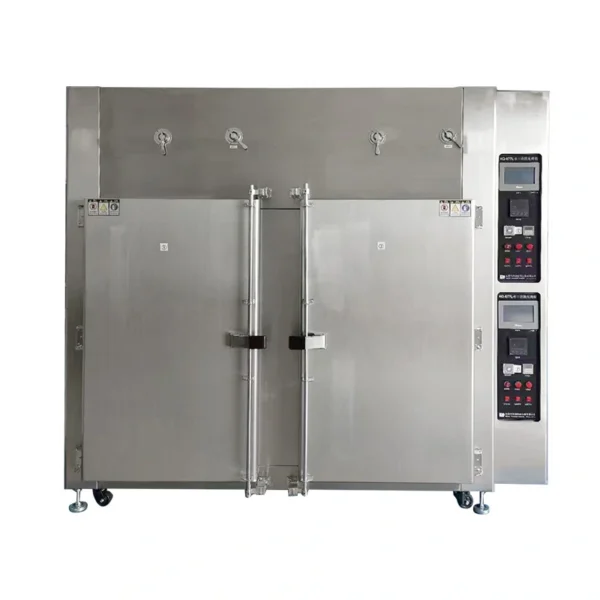
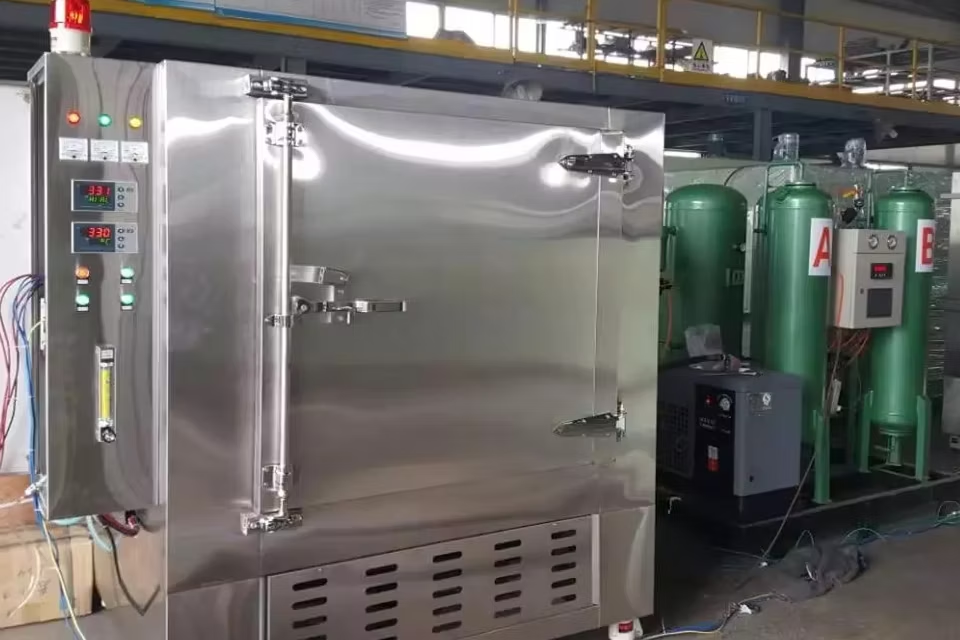
Industrial PTFE Sintering Ovens – High Temp Teflon Sintering Furnace
Our industrial PTFE Sintering Ovens are engineered for superior processing of Teflon™ and other fluoropolymers. This high temperature sintering oven ensures exceptional temperature uniformity for consistent, high-quality results every time.
Built for reliability and efficiency, it’s the ideal solution for demanding industrial applications, reducing cycle times and minimizing defects.