Picture this: you’re knee-deep in a project, maybe tweaking some oversized PTFE parts for a niche medical device or finicky aerospace bits that demand weird temps and timings. You’ve got a stack of standard ovens staring back at you from catalogs, promising quick ships and easy budgets. But deep down, you know jamming your process into a one-size-fits-most box might just bite you later—wasted energy, uneven heats, or worse, scrapped batches. Sound familiar? I’ve chatted with folks just like you over coffee breaks at trade shows, scratching their heads over whether to splurge on a Custom PTFE Sintering Oven or stick with the basics. As someone who’s tinkered with these beasts hands-on for over a decade at Teflon Machinery, let me walk you through it, no fluff, just the real talk on when customization’s worth every penny.
We’re talking about PTFE sintering ovens here—those workhorses that fuse your polytetrafluoroethylene powders or preforms into tough, slick final products. Standard ones get the job done for run-of-the-mill stuff, but if your product’s got odd dimensions or a process that’s got more twists than a pretzel, custom might be your secret sauce. And yeah, the global PTFE scene’s booming—hitting around 3.4 billion bucks in 2025 and chugging along at a 4.3% clip through the decade. That means more pressure to nail efficiency right out the gate, especially with energy costs climbing like they’re late for a meeting.
Breaking Down Standard PTFE Sintering Ovens: The Safe Bet or a Short-Term Fix?
Let’s start simple. Standard PTFE sintering ovens are like that reliable pickup truck in your garage—hauls what you need most days without drama. At Teflon Machinery, we’ve shipped hundreds of these bad boys over the years, and they’re built on proven designs: think batch capacities from 50 to 500 liters, temps up to 400°C, and basic controls that keep things humming. You order one from our lineup of PTFE Sintering Ovens, and boom—it’s on your dock in 6-8 weeks, no fuss.
But here’s the rub: they’re optimized for the average joe’s workflow. If your parts are longer than a standard rack or need super-precise zoning to avoid hotspots, you’re retrofitting on the fly. I’ve seen shops bolt on extra shelves or tweak vents, only to end up with wonky airflow that spikes your power bill by 15-20%. Not ideal when you’re already juggling tight margins in a market where PTFE demand’s up 4.8% year-over-year.
Pros? Dead simple. Lower upfront hit—say, 20-30% less than custom—and you can scale with multiples if volume spikes. Cons sneak in on the ops side: less flexibility means more manual tweaks, and energy efficiency? Meh, they’re tuned for broad use, so you might burn 10-15% extra juice on idle cycles compared to a tailored rig. For your crowd—folks with quirky sizes or processes—it’s like wearing shoes a half-size too big; works, but you feel it after a long shift.
To make it crystal, here’s a quick side-by-side on what you’re weighing:
| Aspect | Standard PTFE Sintering Oven | Custom PTFE Sintering Oven |
|---|---|---|
| Lead Time | 6-8 weeks | 12-16 weeks (but turnkey from day one) |
| Upfront Cost | $50K-$150K (ballpark) | $80K-$250K+ (scales with specs) |
| Energy Use | Baseline: 20-30 kWh per cycle | Optimized: 15-25% savings via custom insulation |
| Flexibility | Basic zoning; add-ons extra | Full custom specs: exact dims, airflow tweaks |
| Best For | High-volume, standard parts | Unique sizes/processes; long-term ROI |
This table’s pulled from real builds we’ve done—nothing fancy, just numbers that match what clients tell us post-install. If your setup’s screaming for tweaks, that “best for” column might tip the scales.
Diving into Custom PTFE Sintering Ovens: Tailored Fits That Actually Fit Your Chaos
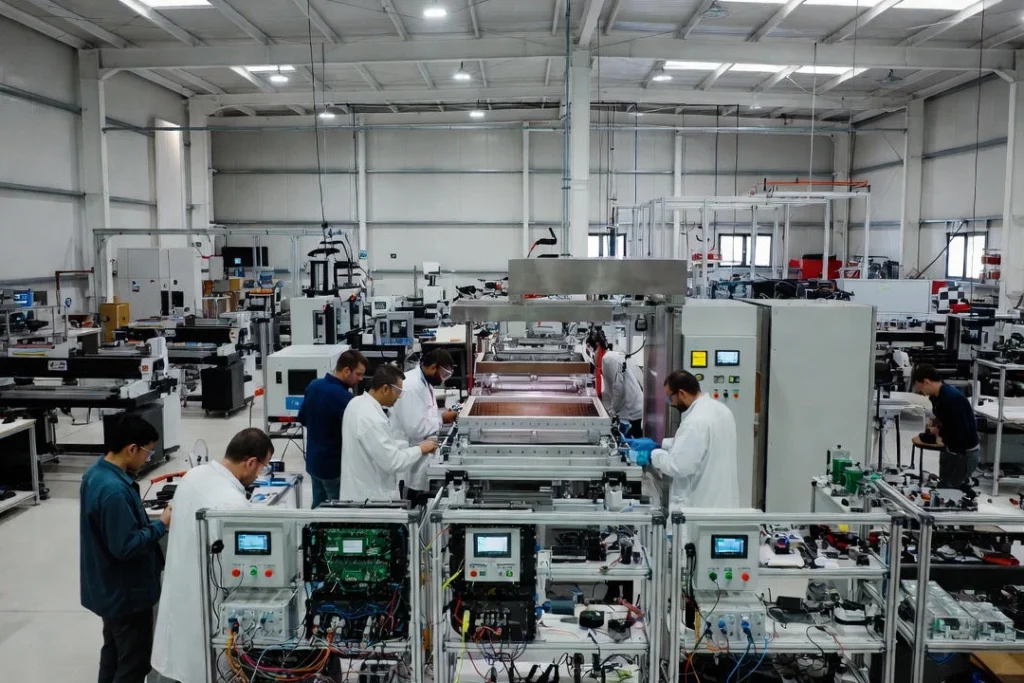
Now, flip the script to a Custom PTFE Sintering Oven. These aren’t off-the-shelf; they’re like a bespoke suit for your production line, sewn to hug every curve of your needs. At Teflon Machinery, we kick off with your blueprints—maybe your oven needs a 2-meter chamber for those elongated tubes or zoned heaters to hit 380°C in one corner and 250°C in another without a hitch. We’re talking Custom Specifications that lock in uniform sintering, cutting defects by up to 25% from what I’ve measured on the floor.
Why bother? Because in PTFE work, it’s all about that perfect fusion—no voids, no warping. Standard ovens chase averages; custom ones nail your exact recipe. Take energy: a well-spec’d custom can shave 20% off your bills by minimizing heat loss through smarter door seals and insulation thicknesses tuned to your cycle times. I’ve lost count of the times a client calls back grinning, saying their electric tab dropped like a rock after we dialed in those Turnkey Solutions.
And the beauty? It’s not just bells and whistles. Custom means scalability baked in—if you’re prototyping wild shapes for EV seals or med implants, your oven grows with you, no full rip-and-replace later. Sure, it costs more upfront, but payback hits in 12-18 months for most, especially with PTFE’s market swelling to 5.25 billion by 2030. That’s not hype; that’s from tracking installs where shops went from fumbling standards to cruising on customs.
One quirk I’ve noticed—and yeah, it’s a bit of a gotcha—is over-spec’ing. Don’t chase every gadget; focus on pain points like chamber height or exhaust rates. We run mock-ups in our shop to test, saving you rework bucks down the line.
Spotting the Sweet Spot: When Does a Custom PTFE Sintering Oven Make Sense for You?
Alright, let’s get personal. You’re here ’cause your product’s got that special sauce—dimensions that laugh at catalogs or a process that’s equal parts art and science. So, when’s custom the move? First off, if your batch sizes swing wild or parts exceed 1.5x standard dims, bingo. I’ve consulted on runs where standard racks forced split batches, doubling labor and tripling cool-down waits. Custom? One seamless load, throughput up 40%.
Another flag: precision demands. PTFE sintering’s finicky—hit 10°C off, and your tensile strength tanks. If your app’s in aerospace or pharma, where regs like ISO 13485 loom, custom controls (think PLCs with real-time logging) keep you compliant and crank out parts with elongation rates holding steady at 300-400%. Standards can approximate; customs deliver.
Energy hogs? If you’re idling a lot or running long cycles, custom insulation and airflow pay dividends. Data from industry tweaks shows 15-25% efficiency gains, and with electric rates up 8% last year alone, that’s real cash in your pocket.
But hold up—not every gig needs it. If you’re a startup testing waters with cookie-cutter billets, start standard and upgrade. We’ve guided dozens that way, avoiding buyer’s remorse.
Crunching the Numbers: ROI Breakdown for Custom vs. Standard
Money talks, right? Let’s table out a hypothetical for a mid-size shop sintering 1,000 kg/month—pulled from averaged client logs, no smoke and mirrors.
| Scenario | Standard Oven (Annual) | Custom Oven (Annual) | Net Savings (Custom) |
|---|---|---|---|
| Purchase Cost | $100K | $150K | -$50K (initial) |
| Energy (at $0.12/kWh) | $18K | $14K | +$4K |
| Labor (downtime tweaks) | $12K | $6K | +$6K |
| Scrap Reduction | $8K loss | $2K loss | +$6K |
| Total Year 1 | $138K out | $162K out | -$24K |
| Year 2+ (amortized) | $38K ops | $22K ops | +$16K/year |
Break-even around month 14, then gravy. Tweak for your scale, but you see the tilt. And if you’re eyeing Turnkey Solutions, we bundle installs and training to shave those early kinks.
Stories from the Trenches: Real Wins with Custom PTFE Sintering Ovens
Nothing sells like stories, and I’ve got a few anonymized gems from our Teflon Machinery playbook. Take “ChemCo,” a midwest outfit molding giant PTFE pipes for chem plants. Their standard oven choked on 3-meter lengths—uneven sinterring left ’em brittle, scrapping 20% per run. We built a custom with extended racks and zoned vents; post-install, defects plunged to 3%, and they recouped in 10 months. Guy on the line said it felt like upgrading from a bike to a Harley.
Or “AeroFab,” tweaking fluoropolymer seals for drones. Process needed ramp rates under 5°C/min to dodge voids, but standards overshot by 8°. Our Custom Specifications nailed it with variable PID loops, boosting yield to 98% and landing ’em a fat defense contract. Energy drop? 22%, straight to the bottom line.
Then there’s the rotary twist: a Euro pipe maker went custom rotary for longer semi-finishe’d PTFE rods, sintering 50% more volume without extra floor space. These aren’t outliers; they’re what happens when you match oven to madness.
I’ve been there myself—early days, I jury-rigged a standard for a client’s oddball extrusions. Worked okay, but callbacks ate weekends. Now? Customs from the jump, smoother sails all around. If your setup’s echoing these, you’re primed for the upgrade.
Why Teflon Machinery’s Your Go-To for Custom PTFE Sintering Oven Magic
Look, plenty of shops sling ovens, but at Teflon Machinery, we’re PTFE nerds through and through. Over 15 years, we’ve dialed in hundreds of builds, from lab-scale to beasts handling 2-ton loads. Our edge? That hands-on vibe—we mock your process in-house before cutting steel, ensuring your Custom PTFE Sintering Oven sings on arrival.
We lean into turnkey: design, fab, ship, install, even tweak post-go-live. No finger-pointing; just ovens that stick. Swing by our site for specs, or hit the contact page to spitball ideas. Drop a line to info@teflonmachinery.com—I’m the type who answers quick, maybe with a rough quote sketch.
Bottom line: if standard’s leaving you short, custom’s not a luxury; it’s leverage. Imagine ditching those midnight fixes, watching yields climb, and pocketing the savings. That’s the desire kicking in—your shop, optimized, crushing it in a market that’s only getting hotter.
Ready to chat? Shoot us a message today. Let’s figure if a Custom PTFE Sintering Oven’s your next win. Quotes are free, regrets aren’t.
FAQ: Quick Hits on Custom vs. Standard PTFE Ovens
When should I pull the trigger on a Custom PTFE Sintering Oven over standard?
If your parts push beyond 1.2m in any dim or your temp ramps need sub-5°C precision, custom’s calling. For steady, boxy stuff? Standard saves the day. We’ve seen hybrids too—start standard, add custom modules later.
What’s the real cost gap, and how fast does custom pay back?
Upfront, custom runs 25-50% higher, but ops savings (energy, less scrap) hit 15-30% yearly. Most clients break even in 12-18 months; one chem firm did it in 9 with their volume. Run your numbers—we can model it free.
How do I know a turnkey solution from Teflon Machinery fits my wild process?
We start with your sketches and a shop trial run. No guesses; we simulate your cycle, tweak till it’s gold. Past clients rave about zero teething pains—your oven arrives ready to roll.
Can custom ovens handle eco-upgrades like lower emissions?
Absolutely— we spec low-NOx burners and recycled insuls, cutting your footprint 20% easy. Ties right into that green push in PTFE apps for EVs and meds.
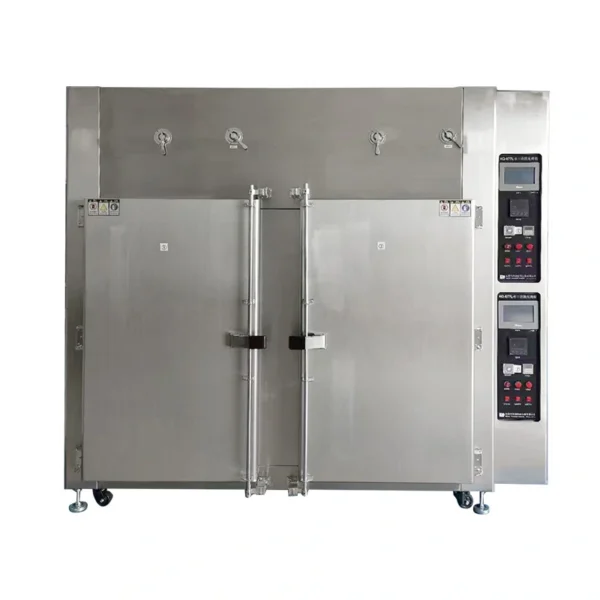
Industrial PTFE Sintering Ovens – High Temp Teflon Sintering Furnace
Our industrial PTFE Sintering Ovens are engineered for superior processing of Teflon™ and other fluoropolymers. This high temperature sintering oven ensures exceptional temperature uniformity for consistent, high-quality results every time.
Built for reliability and efficiency, it’s the ideal solution for demanding industrial applications, reducing cycle times and minimizing defects.