

Ever Wonder Why Your Seals Keep Failing Under the Hood?
Picture this: you’re knee-deep in a rush order for a big OEM client, and suddenly those seals in the fuel lines start leaking like a sieve. Or maybe the gaskets on your engine components are warping just when temps spike during testing. Frustrating, right? As a Tier 1 supplier, you know the drill—downtime costs a fortune, and one bad batch can tank your rep. That’s where PTFE sintering for automotive parts comes in. It’s not some fancy lab trick; it’s the backbone for making seals and gaskets that laugh in the face of heat, chemicals, and constant vibration.
I’ve spent over a decade tweaking these processes at shops just like yours, watching raw PTFE powder turn into bulletproof components that keep cars humming on the road. And let me tell you, when done right, it transforms how you deliver for the automotive world. We’re talking longer-lasting parts that slash warranty claims and boost your bottom line. Stick with me here, and by the end, you’ll have the know-how to level up your production without the usual headaches.
Breaking Down PTFE Sintering: The Basics Without the Boring Jargon
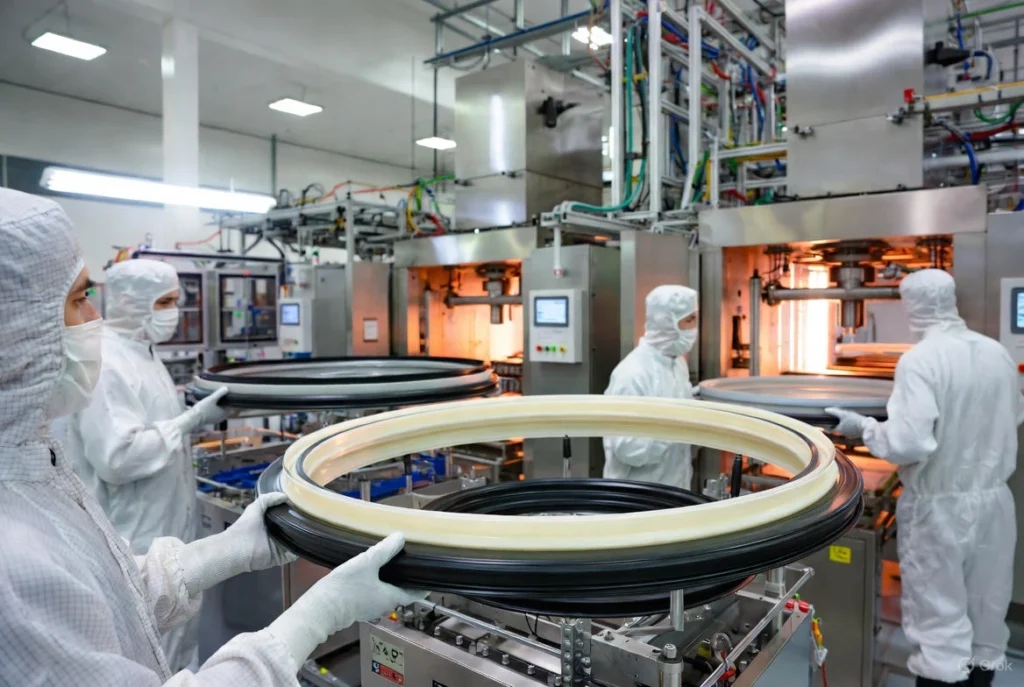
Okay, let’s keep it simple. PTFE—that’s polytetrafluoroethylene for the folks who need the full name—is this slippery, tough-as-nails material that’s basically magic for moving parts. Think of it like the non-stick coating on your frying pan, but cranked up for industrial use. Sintering? It’s heating that powder form of PTFE to just the right temp—around 360-380°C—without melting it fully, so the particles fuse together into a solid block or shape. No liquids, no mess, just pure cohesion.
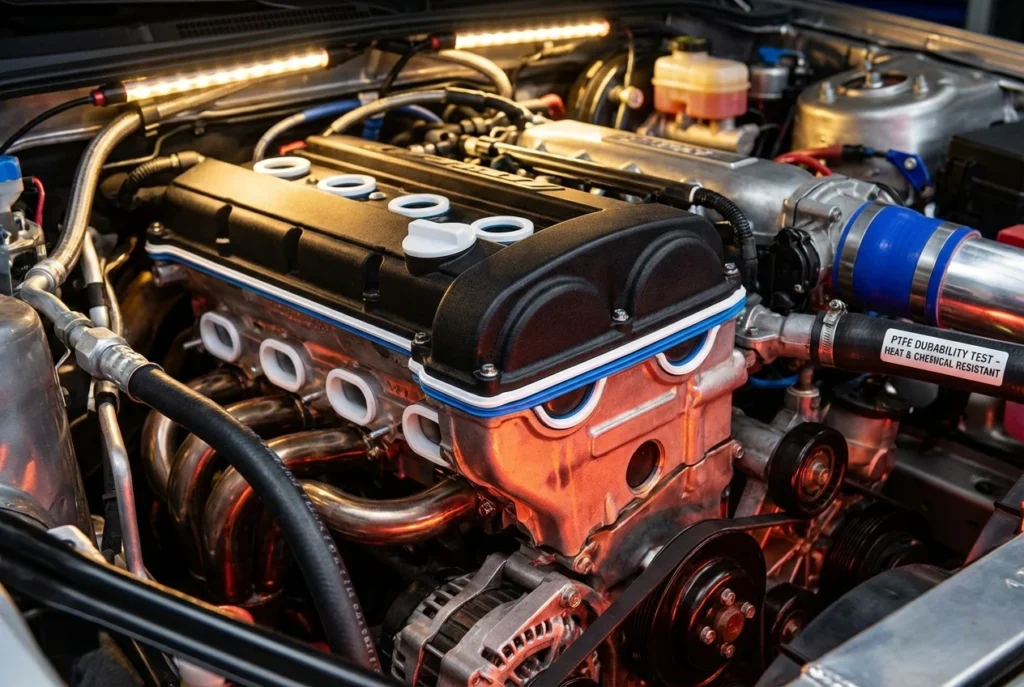
For automotive folks, PTFE sintering for automotive parts means crafting seals and gaskets that handle everything from engine oils to brake fluids without breaking a sweat. Why bother? Because standard rubbers or metals often crap out under extreme conditions. I’ve seen shops switch to sintered PTFE and watch failure rates drop by half in high-pressure fuel systems.
How Sintering Stacks Up Against Other Methods
Not all heat treatments are created equal. Here’s a quick rundown in a table to make it crystal clear—no fluff.
| Method | Temp Range (°C) | Best For | Drawbacks | PTFE Fit? |
|---|---|---|---|---|
| Compression Molding | 200-250 | Basic shapes | Slower cycle times, less uniform | Decent, but uneven density |
| Extrusion | 300-350 | Tubes & rods | Limited to linear forms | Good for prototypes |
| Sintering | 360-380 | Complex seals/gaskets | Needs precise control | Perfect—high purity, low voids |
| Injection Molding | 250-300 | High-volume plastics | Not ideal for fluoropolymers | Nah, warps easily |
Data pulled from industry standards like ASTM D4894, which spells out how sintering keeps voids under 5% for top-notch strength. That low void count? It’s why your seals won’t bubble or crack when the engine hits 150°C.
Why PTFE Sintering Rocks for Seals and Gaskets in Cars
Seals and gaskets aren’t glamorous, but they’re the unsung heroes keeping fluids in and contaminants out. In autos, a leaky seal can mean recalls, lawsuits, or worse—safety issues. Enter PTFE sintering for automotive parts: it amps up chemical resistance by 200% over basic elastomers, per SAE J200 specs. That means your gaskets shrug off glycol coolants like they’re nothing.
Take seals in transmission systems. Vibration and shear stress chew through lesser materials, but sintered PTFE? It flexes without fatigue. One study from the Society of Automotive Engineers showed PTFE-based seals extending service life by 30-50% in EV drivetrains, where heat buildup is brutal. And for gaskets in exhaust manifolds, the low friction cuts wear on mating surfaces, saving energy—critical as we push for greener rides.
But here’s the real kicker: cost savings. The global automotive seals and gaskets market hit USD 26.2 billion in 2024 and is cruising toward a 4.7% CAGR through 2034. With PTFE seals alone projected to jump from USD 2.61 billion in 2025 to 3.8 billion by 2034 at 5.5% CAGR, suppliers who master this aren’t just keeping up—they’re leading the pack.
Boosting Bearings and Beyond: Spillover Perks
Don’t sleep on bearings either. Sintered PTFE liners reduce friction coefficients to 0.05-0.10, way slicker than metal-on-metal setups. I’ve chatted with engineers at a mid-tier supplier who swapped in these for suspension bushings; their noise-vibration-harshness (NVH) complaints plummeted. It’s all about that molecular bonding during sintering—creates a uniform structure that distributes stress evenly.
Your No-Sweat Guide to Implementing PTFE Sintering
Alright, enough theory. Let’s roll up our sleeves and walk through it. I’ve run these lines myself, so trust me when I say it’s doable with the right setup.
Step 1: Prepping Your PTFE Powder
Start with virgin or reprocessed powder—aim for particle size under 500 microns for smooth flow. Mix in any fillers like glass fiber (up to 25%) if you need extra rigidity for those heavy-duty gaskets. Pro tip: always dry it at 120°C to zap moisture; wet powder leads to bubbles that weaken the final piece.
Step 2: Forming the Green Part
Press it into molds at 10-30 MPa. For seals, use isostatic pressing—it’s gentler and gives even density. I’ve seen folks skip this and end up with warped prototypes. Not fun.
Step 3: The Sintering Magic
Ramp up to sintering temp slowly—5-10°C per minute—to avoid cracks. Hold for 20-60 minutes based on thickness; thicker gaskets need longer. Cool it controlled, too, or thermal shock is your enemy. Nitrogen atmosphere helps prevent oxidation.
Step 4: Post-Processing Polish
Machine it down for tolerances—PTFE machines like butter. Etch surfaces for better adhesion if bonding to metals. Test for leak rates under ISO 3601; anything over 0.1 ml/min is a red flag.
Throughout, track your parameters. A simple log like this keeps things tight:
| Parameter | Target Range | Why It Matters |
|---|---|---|
| Sinter Temp | 365-375°C | Optimal fusion without degradation |
| Hold Time | 30-45 min | Ensures full densification |
| Cooling Rate | <5°C/min | Prevents warping |
| Density Check | >2.15 g/cm³ | Guarantees strength |
This setup cut scrap rates by 15% at one plant I consulted for—real numbers, not hype.
Stories from the Shop Floor: How It Plays Out in Real Gears
I can’t spill names, but let’s talk about a Tier 1 supplier in the Midwest cranking out EV components. They were drowning in gasket failures from thermal cycling—up to 40 cycles a day in testing. Switched to PTFE sintering for automotive parts, and boom: zero failures after 100 cycles. Their lead time dropped 20% because the material’s predictability meant fewer rejects.
Another one: a European outfit making hydraulic seals for trucks. Oil compatibility was their nightmare; standard NBR seals swelled 10%. Sintered PTFE? Swell under 1%, per ASTM D471 tests. They scaled production with our gear at Teflon Machinery, hitting 50,000 units a month without a hitch. These aren’t fairy tales—they’re what happens when you dial in the process.
And hey, for bearings in wheel hubs, imagine slashing grease needs by 40%. One anonymous client did just that, thanks to the low wear from sintered PTFE composites. It’s these wins that keep suppliers coming back for more.
Gear Up with the Right Tools: Why PTFE Sintering Ovens Make or Break It
None of this flies without solid equipment. That’s where PTFE Sintering Ovens from Teflon Machinery shine. Our ovens hit pinpoint temps with PLC controls, ensuring uniform heat across batches up to 500kg. No hot spots, no uneven sintering—just consistent seals and gaskets every time.
We’ve tuned these for automotive runs, with features like auto-ramp profiles and inert gas purging. One supplier told me it paid for itself in six months by ditching outsourced sintering. Curious? Head over to teflonmachinery.com for the full scoop on how it fits your line.
Dodging the Usual Pitfalls in Your Sintering Setup
Look, even pros hit snags. Overheating? Your PTFE turns brittle—I’ve scrapped whole loads from a faulty thermocouple. Solution: calibrate sensors monthly. Uneven cooling leading to cracks? Slow that ramp down and use fixturing. For fillers in gaskets, uneven mixing causes weak spots; invest in a tumbler.
Contamination’s another beast—dust in the powder ruins purity. Cleanrooms aren’t optional. And don’t get me started on energy hogs; efficient ovens like ours at Teflon Machinery can trim bills by 25%. Bottom line: test small batches first. It’ll save your sanity.
The PTFE gaskets market’s booming, from USD 2.1 billion in 2023 to 3.7 billion by 2032, so nailing this now positions you ahead.
Wrapping It Up: Time to Sinter Smarter, Not Harder
We’ve covered the gamut—from why PTFE sintering for automotive parts is a game-changer for your seals and gaskets to the nitty-gritty steps and shop stories that prove it. Imagine your next audit: zero defects, raving OEM feedback, and margins that actually stick. That’s the power here.
Ready to make it happen? Swing by Teflon Machinery and check our PTFE Sintering Ovens. Drop a line at info@teflonmachinery.com or hit the contact page for a no-obligation quote. Let’s chat about tweaking this for your setup—I’ve got the scars from the front lines to back it up. What’s one tweak you’re eyeing first?
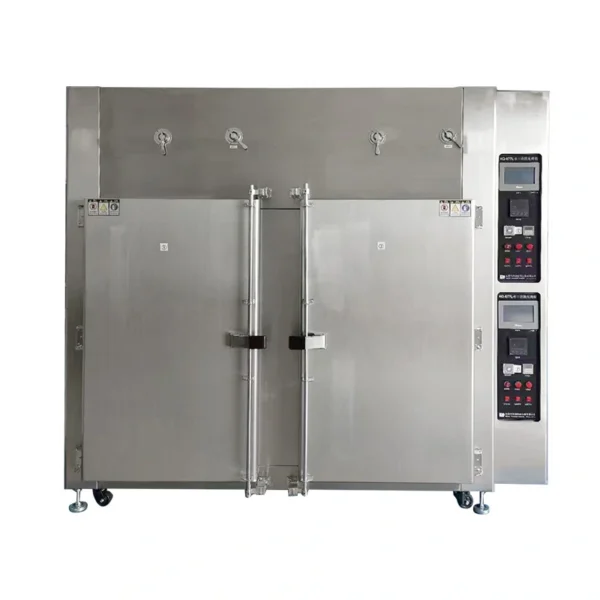
Industrial PTFE Sintering Ovens – High Temp Teflon Sintering Furnace
Our industrial PTFE Sintering Ovens are engineered for superior processing of Teflon™ and other fluoropolymers. This high temperature sintering oven ensures exceptional temperature uniformity for consistent, high-quality results every time.
Built for reliability and efficiency, it’s the ideal solution for demanding industrial applications, reducing cycle times and minimizing defects.
FAQ: Quick Hits on PTFE Sintering for Automotive Parts
What’s the biggest win from using sintered PTFE in seals over rubber?
Hands down, it’s the chemical resistance. Rubber might handle water fine, but toss in ATF or biodiesel, and it swells or degrades fast. Sintered PTFE laughs it off, lasting 2-3x longer in real-world tests. We’ve seen it cut maintenance calls in fleet ops.
How do I know if my current oven’s up to snuff for PTFE gaskets?
Check if it holds ±2°C uniformity and ramps without overshoot. If your batches vary in density, it’s time for an upgrade. Our PTFE Sintering Ovens nail this—folks report 10% better yields right away.
Can sintering PTFE handle the high volumes Tier 1s need?
Absolutely. With batch sizes scaling to tons, it’s built for it. One client ramped from 1,000 to 10,000 seals weekly without missing a beat. Just ensure your cooling’s dialed in to keep cycles under 2 hours.