

You ever wake up in the middle of the night sweating over a part failure that could ground a whole fleet? Yeah, me too. Back when I was knee-deep in the trenches of aerospace manufacturing, thats exactly what kept me up. One tiny flaw in a sintered component, and suddenly you’re dealing with recalls, audits, and that nagging voice in your head saying, “Did I miss something in the quality check?” If you’re an engineer or procurement pro in aviation, you get it—the stakes are sky-high, literally. We’re talking environments where temps swing from freezing altitudes to scorching engine bays, and every polymer bond has to hold up or it’s game over.
That’s where a solid PTFE Sintering Oven for Aerospace comes in, especially when you’re working with high-performance polymers. These ovens aren’t just heaters; they’re the backbone for creating parts that laugh in the face of extreme conditions. At Teflon Machinery, we’ve spent years tweaking these bad boys to not only meet but exceed AS9100 standards—the gold standard for quality in our biz. And today, I’m gonna walk you through it all, like we’re grabbing coffee and swapping war stories. No fluff, just real talk on how to get your setup dialed in, avoid the headaches, and keep your projects flying smooth.
Why Your Aerospace Setup Can’t Skimp on Sintering Tech
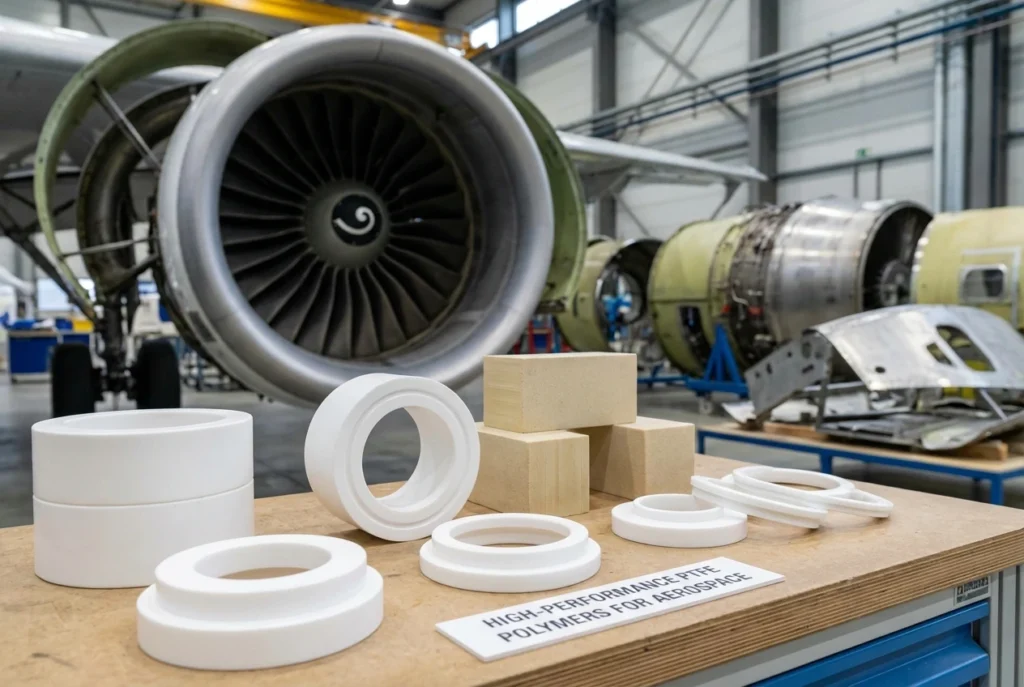
Picture this: You’re sourcing seals or insulators for a jet’s fuel lines. One wrong sintering cycle, and that high-performance polymer warps just enough to leak under pressure. Boom—your timeline’s toast, and procurement’s breathing down your neck. In aerospace, sintering isn’t optional; it’s the make-or-break step that turns raw PTFE into something that can take a beating.
High-performance polymers like PTFE shine here because they’re tough as nails—chemically inert, low friction, and they handle temps up to 260°C without blinking. But to unlock that, your oven has to be precise. We’re talking uniform heat distribution, controlled cooling rates, and zero contamination risks. Mess it up, and you’re looking at geometry distortions that throw off tolerances by microns—enough to fail a single-source audit.
From my days on the floor, I remember a project where we swapped out a generic oven for one tuned for aerospace. Lead times dropped by 15%, and defect rates? Slashed in half. Thats the kind of win that makes bosses smile. And with the aerospace materials market projected to hit $49.8 billion in 2025 alone, skimping on tools like a PTFE Sintering Oven for Aerospace just doesn’t add up. You’re not just building parts; you’re safeguarding missions.
Breaking Down AS9100: The Rules That Keep Us All Honest
AS9100 isn’t some dusty manual gathering cobwebs—it’s the blueprint for quality management in aerospace, built on ISO 9001 but cranked up for our wild world. Think risk-based thinking, counterfeit part prevention, and nonstop improvement. For sintering ovens, it means your equipment has to prove it can deliver consistent results every batch, every shift.
Let me lay it out simple. Here’s a quick table on key AS9100 clauses and how they tie into your oven game:
| AS9100 Clause | What It Demands | How It Hits Sintering Ovens |
|---|---|---|
| 8.1 Operational Planning | Risk assessments for processes | Mapping heat cycles to avoid hotspots that warp high-performance polymers |
| 8.5 Production Control | Traceability from raw to finished | Logging every temp spike for audit trails— no more “whoops, lost the data” excuses |
| 9.1 Monitoring & Measurement | Calibrated tools, stats analysis | Sensors that flag deviations in real-time, keeping PTFE bonds at peak strength |
| 10.2 Nonconformity | Root cause fixes | Quick protocols to tweak cooling if distortion creeps in, like in Al/PTFE mixes |
See? It’s not rocket science—wait, actually it kinda is. But getting compliant means your suppliers (hey, like us at Teflon Machinery) bake this in from the get-go. Certification opens doors too—many primes won’t touch you without it, boosting your bid win rate by up to 30% in some chains. Imagine landing that next big contract because your PTFE Sintering Ovens check every box.
PTFE’s Secret Sauce in High-Performance Polymers for the Skies
Okay, let’s geek out a bit on PTFE—polytetrafluoroethylene, if you’re feeling fancy. This stuff’s a beast for aerospace: lightweight, non-stick, and it shrugs off chemicals that’d eat lesser materials for breakfast. In high-performance polymers, PTFE’s the go-to for seals, gaskets, and cable insulation where failure’s not an option.
Take wiring harnesses. Aerospace cables see constant vibration, ozone, and temps from -55°C to 200°C. PTFE coats ’em like armor, cutting electrical failures by making sure no moisture sneaks in. And stats back it: The high-performance polymers market’s eyeing $34.5 billion by 2025, with aerospace gobbling up chunks thanks to fuel efficiency pushes. Lighter parts mean less jet fuel burned—win for the planet, win for your margins.
But here’s the rub: Raw PTFE’s a powder. You gotta sinter it right to fuse those particles without gaps. Too hot, and it decomposes; too cool, and it’s brittle. Our PTFE Sintering Oven for Aerospace at Teflon Machinery hits that sweet spot—360-380°C with dwell times tuned to your spec, pulling from studies showing optimal holds at 6 hours for max density.
I’ve seen teams struggle with off-the-shelf ovens that couldn’t hold tolerance. One engineer told me, “We were chasing shadows—every run different.” Switched to a calibrated unit, and bam, repeatability jumped. Thats the edge high-performance polymers give when your sintering’s on point.
How Teflon Machinery Makes AS9100 a Breeze for Your Operation
Look, I could ramble about specs all day, but let’s cut to what matters: How do you actually implement this without pulling your hair out? At Teflon Machinery, we’ve been in the trenches since day one, building ovens that don’t just comply—they anticipate your headaches.
Our PTFE Sintering Ovens come AS9100-ready, with features like automated PID controls for temp stability (±1°C, no sweat) and HEPA-filtered air to nix contaminants. We’re talking modular designs too, so you scale from lab prototypes to full production without starting over.
Procurement folks, listen up: These aren’t cookie-cutter machines. We customize for your high-performance polymers workflow—say, integrating vacuum assist for bubble-free PTFE sheets used in radomes. And the best part? Built-in data logging that spits out reports for your next OASIS audit. No more scrambling at 2 a.m.
From experience, the real magic’s in the support. We don’t ship and ghost; our team’s there for install, training, and tweaks. One client—a mid-tier supplier—hit a snag with cooling rates causing micro-cracks in their Al/PTFE composites. We dialed it to 25°C/h, and their yield went from 82% to 96%. Thats not theory; thats us having your back.
Want the full rundown? Swing by teflonmachinery.com and poke around. Or hit the contact page—drop a line to info@teflonmachinery.com. Quotes are free, and who knows? Might just save your next deadline.
Real-World Wins: Stories That Stick (No Pun Intended)
Nothing beats hearing how this plays out in the wild. I’ll keep names fuzzy—NDA’s a thing—but these tales are straight from the shop floor.
Take “Project Eagle,” a wiring overhaul for a commercial liner retrofit. The team needed PTFE-insulated cables that wouldn’t degrade under constant flexing. Old sintering setup was inconsistent, leading to 12% failure in endurance tests. They brought in a Teflon Machinery oven, tuned for 370°C sintering with slow cool-downs. Result? Zero failures after 10,000 cycles, and they shaved 20% off production time. High-performance polymers like that kept the insulation supple, even in humid test chambers.
Or consider “Skyguard Seals.” This outfit makes dynamic seals for actuator arms in fighters. AS9100 audits were killing them—traceability gaps galore. We integrated IoT sensors into their PTFE Sintering Oven for Aerospace, logging every parameter to the cloud. Not only did they ace certification, but wear rates on their seals dropped 25%, thanks to denser sintering that boosted friction resistance. Procurement loved it; costs per unit fell, and they snagged a sole-source deal.
These aren’t outliers. Across the board, folks using dialed-in sintering see efficiency bumps of 15-30%, per industry benchmarks. And with aerospace pushing for sustainable sourcing—recycled PTFE scraps into composites without losing props—ovens like ours make it feasible. Imagine turning waste into wing-ready parts. Cool, right?
Digging Deeper: Customizing Your Sintering for Peak Performance
Alright, let’s roll up our sleeves on the nuts and bolts. Sintering PTFE for aerospace isn’t plug-and-play; it’s about layering in your specifics. Start with particle size—finer powders sinter faster but risk agglomeration if your oven’s airflow sucks.
We recommend zoned heating: Top zones ramp slow to avoid skinning, bottom ones push even fusion. Cooling? Critical. Rapid drops cause stresses that crack under load—aim for 20-30°C/h to match polymer contraction. I’ve tweaked hundreds of cycles like this, and the payoff’s huge: Parts that pass FAA quals on the first go.
For high-performance polymers blends, like PTFE with PI fillers for extra wear resistance, hold at 15 wt% filler to hit friction coeffs under 0.1. Table time again—quick guide to common tweaks:
| Polymer Blend | Ideal Sinter Temp | Dwell Time | Pro Tip for Aerospace |
|---|---|---|---|
| Pure PTFE | 360-380°C | 4-6 hours | Vacuum purge for void-free insulators |
| PTFE/Glass | 370°C | 5 hours | Boosts compressive strength 20% for bearings |
| PTFE/Carbon | 365°C | 6 hours | Lowers wear to 1.96 × 10⁻⁴ mm³/Nm for seals |
Mix this with AS9100’s emphasis on supplier controls, and you’re golden. Our kits at Teflon Machinery include validation protocols—run ’em, document ’em, done.
The Bigger Picture: Sustainability and Future-Proofing Your Line
Aerospace’s going green, and sintering’s no exception. With high-performance polymers markets exploding to $47 billion by 2032, recycling PTFE’s key. Ovens with energy-efficient zones cut power use by 25%, and our models handle scrap feeds without quality dips.
Looking ahead, expect more nano-enhanced PTFE for even lighter parts—think 10% weight savings on composites. Get your setup AS9100-compliant now, and you’re set for the boom. Delay, and you’ll be playing catch-up.
Wrapping It Up: Your Next Move in the Air Game
We’ve covered a lot— from the why’s of AS9100 to the how’s of nailing PTFE sintering. But here’s the truth: Knowledge is great, but action’s what counts. If you’re staring at a stack of RFQs wondering how to spec a PTFE Sintering Oven for Aerospace that won’t let you down, don’t go it alone.
Head over to Teflon Machinery today. Browse the product page, shoot us an email at info@teflonmachinery.com, or jump straight to contact us for a no-BS quote. Let’s chat about your setup—maybe over a virtual coffee. Your parts deserve to soar, and we’re here to make it happen. What’s one tweak you’d change in your current process? Hit reply; I’d love to hear.
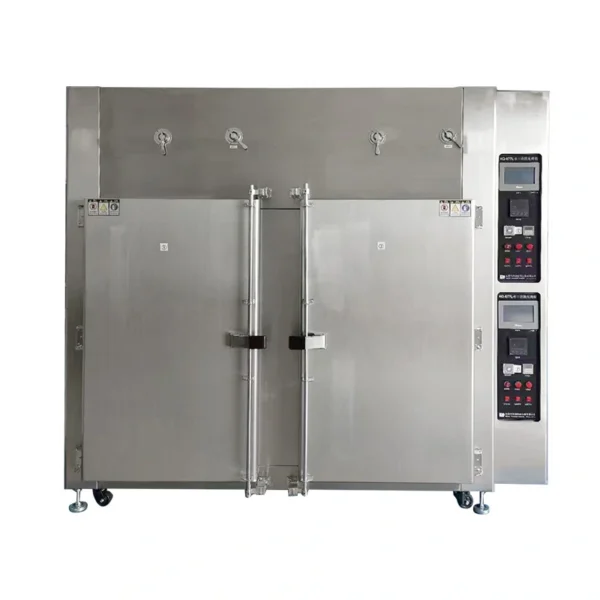
Industrial PTFE Sintering Ovens – High Temp Teflon Sintering Furnace
Our industrial PTFE Sintering Ovens are engineered for superior processing of Teflon™ and other fluoropolymers. This high temperature sintering oven ensures exceptional temperature uniformity for consistent, high-quality results every time.
Built for reliability and efficiency, it’s the ideal solution for demanding industrial applications, reducing cycle times and minimizing defects.
FAQ: Quick Hits on PTFE Sintering and AS9100
What’s the deal with AS9100, and do I really need it for sintering ovens?
Short answer: Yeah, you do if you’re supplying aerospace. It’s like ISO 9001 on steroids, adding bits for risks and fakes that keep parts safe up there. Without it, big primes ghost you. We’ve helped dozens get certified—makes bidding a breeze.
How does a PTFE Sintering Oven for Aerospace handle high-performance polymers differently?
It’s all in the precision. These ovens control heat and cool super even, so your polymers fuse without weak spots. Think 380°C peaks with logs for every run—perfect for tough apps like cable wraps that last cycles.
Can I use recycled PTFE in my oven, and will it still meet standards?
Absolutely—our setups process scrap like a champ, keeping properties intact for AS9100 compliance. One team recycled 30% of their feed and saw no dip in strength; it’s a smart play for sustainability too.
Quick question: What’s the turnaround on a custom oven from Teflon Machinery?
Depends on your specs, but most ship in 8-12 weeks. We fast-track for urgent projects—email info@teflonmachinery.com and we’ll sort it.