
Getting into PTFE production can feel a bit overwhelming at first, right? You’ve heard about how tough and useful this stuff is – seals that don’t corrode, bearings that last forever, liners for chemical tanks. But actually building a line to make parts with compression molding? That’s where a lot of folks get stuck.
I’ve helped dozens of startups (and some not-so-startups) get their first PTFE compression molding production line running smoothly over the years at Teflon Machinery. And yeah, I’ve seen the mistakes – ovens that weren’t big enough, presses that couldn’t hold pressure steady, layouts where material flowed backwards and wasted half the day.
This guide is everything I wish someone handed me when I was figuring it out. We’ll go step-by-step: space, equipment, process, safety, costs, the works. By the end you’ll know exactly what you need to get parts coming out the door instead of just dreaming about it.
Quick market reality check: the global PTFE market was around USD 2.8–3.8 billion in 2024 depending on whose numbers you trust (IMARC Group says ~2.83B, Precedence Research ~3.85B), and it’s growing steady at 4–5.5% CAGR through 2030-ish. Asia-Pacific eats up over half of it. Point is – there’s real demand if you do it right.
Why Compression Molding for Your First PTFE Line?
Most new players start with compression because:
- Lowest entry cost compared to ram extrusion or isostatic
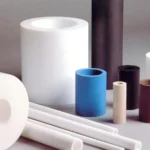
- You can make billets, sheets, basic seals/gaskets from day one
- Scales nicely from 500 kg/month hobby level to 50 tons/month serious business
Other methods (paste extrusion for tubes, isostatic for balls) come later once you’re making money.
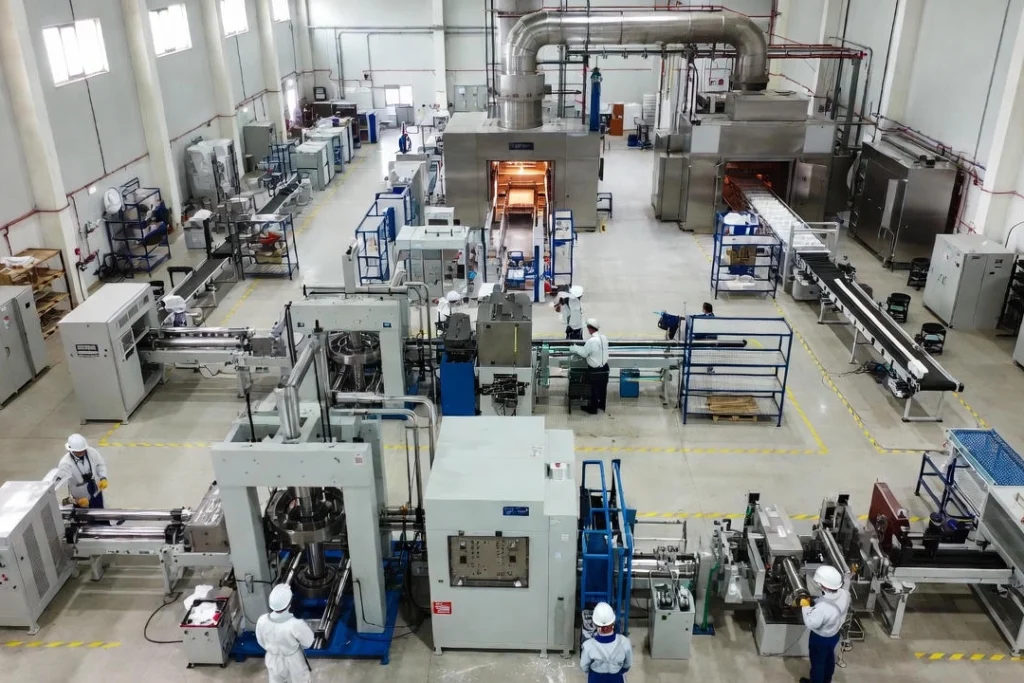
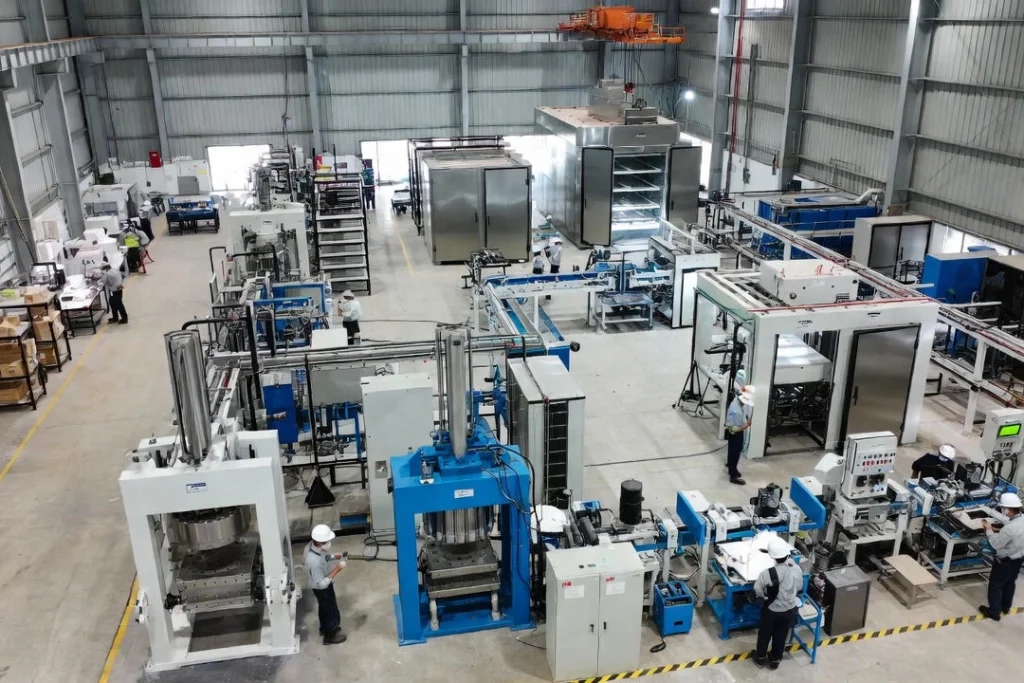
Step 1: Planning Your Factory Layout (Don’t Skip This – It Saves Headaches)
Bad layout = constant walking, dust everywhere, preforms cracking because they’re carried too far.
A clean one-way flow works best:
| Area | Size (for starter 200–500 m² shop) | What Happens Here | Key Tips |
|---|---|---|---|
| Raw Material Storage | 50–80 m², climate-controlled 18–25°C, <50% humidity | PTFE powder arrives in 25 kg bags/drums | Keep sealed, FIFO stock rotation, away from sintering ovens |
| Preforming / Compression | 80–120 m² | Weighing → filling molds → pressing | Good ventilation (powder is fine), anti-static flooring |
| Sintering Zone | 60–100 m² (ovens take space) | Load preforms → sinter → controlled cool | Separate wall if possible – heat + HF fumes |
| Cooling & De-flashing | 40 m² | Slow cool racks, trim flash | Air-conditioned room, prevents cracks |
| Machining / Finishing | 80 m² | CNC lathes, mills for final dimensions | Dust extraction mandatory |
| Quality Control + Packing | 30–50 m² | Dimension checks, tensile testing, packing | Clean room vibe here |
| Utilities / Office | Rest | Compressor, chiller, office | Keep compressor outside if noisy |
Pro tip: leave 30% extra space. You’ll add a second press sooner than you think.
Step 2: Equipment You’ll Actually Need (And What to Avoid Buying Cheap)
Core Machines
- Hydraulic Compression Press
Start with 100–300 ton. Automatic pressure hold is a must – manual ones kill your back and consistency.
Our PTFE Molding Machine line has PLC control, recipe storage, and safety light curtains. Tons of clients started with our 150-ton model. - PTFE Sintering Oven
This is where 80% of defects happen if you skimp. Needs precise ramp/soak/cool profiles (±2°C), good airflow, and HF-resistant lining.
Electric or gas – gas is cheaper to run long-term.
Check our PTFE Sintering Ovens – batch sizes from 200 kg up to 2 tons, full data logging. - Supporting Gear
- Powder blender (if running filled compounds)
- Preform trolleys (stainless, easy clean)
- Water chiller for press hydraulics
- Air compressor + dryer
- Basic lab: tensile tester, specific gravity kit, DSC if you’re serious
Starter line budget (decent quality, not cheapest Ali stuff): $180k–$350k depending on automation level. Go turnkey and you shave 6–12 months off startup time – that’s where a Turnkey PTFE Production Line really shines.
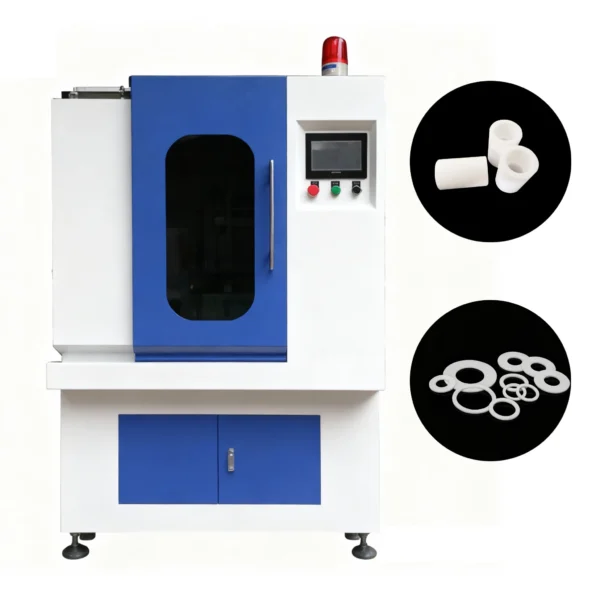
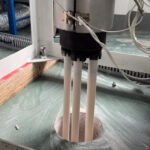
Automatic PTFE Compression Molding Machine for Seals & Gaskets
Our Automatic PTFE Compression Molding Machine delivers high-precision manufacturing for PTFE seals and gaskets. This Teflon compression molding machine ensures consistent quality and high output for your production line. Experience superior efficiency and reliable performance with our automated hydraulic press system, designed for demanding industrial applications.
Step 3: The Actual Process – How It Works Day-to-Day
- Weigh & Fill – Exact powder amount (overfill 15–20% for shrinkage)
- Compress – 300–500 kg/cm², dwell 1–10 min depending on size
- Demold – Preform is chalky-fragile, handle like eggs
- Sinter – Typical cycle: ramp to 380°C, soak, slow cool 50–80°C/hr
- Cool – Controlled or cracks form
- Machine – Turn billets into finished seals, bushings, etc.
Common newbie mistake: rushing the cool-down. I’ve seen $8,000 worth of 500 mm billets turn into scrap because someone opened the oven door too early.
Safety & Environment (Yeah, It’s Boring But Important)
- HF gas during sintering – proper scrubber or you’ll smell it (and regret it)
- Powder is slippery – non-slip floors
- High voltage on ovens – lockout/tagout religion
- Local permits – some areas treat PTFE sintering like chemical plant
Real Stories (Names Changed Obviously)
One client in India started in a 300 m² shed with our 100-ton press + 500 kg oven. First year they did mostly glass-filled bushings for pumps. Year three they added two more lines and now export to Europe.
Another guy in Texas tried building everything himself. Saved maybe $40k upfront, lost six months and two bad batches. Eventually bought our turnkey package and said it was the best money ever spent.
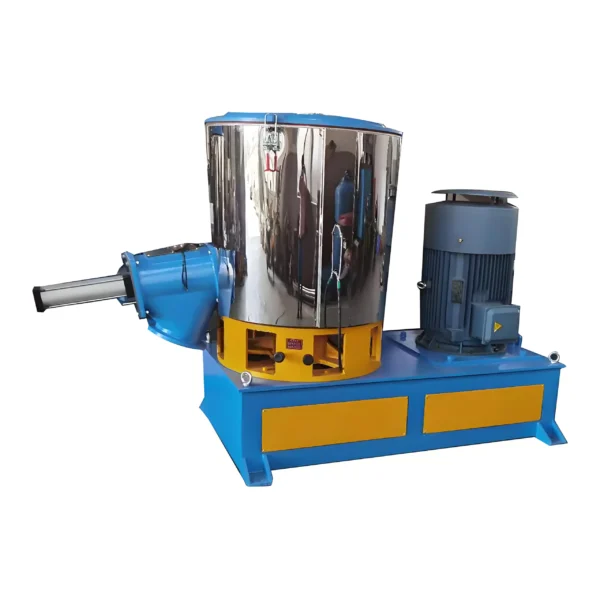
Industrial PTFE Mixer – High Shear Powder Blender for Compounding
Our Industrial PTFE Mixer is engineered for high-performance compounding and dispersion. This robust high-shear PTFE Powder Blender ensures perfect homogeneity for filled polymers, coatings, and advanced composites. Achieve superior batch consistency and reduce mixing times with our powerful PTFE mixing equipment.
Costs Breakdown (Rough 2025 Numbers)
| Item | Budget Option | Solid Mid-Range (Recommended) |
|---|---|---|
| 150-ton Press | $45k | $85k |
| 800 kg Sintering Oven | $60k | $120k |
| Tools + ancillary | $30k | $50k |
| Installation/training | $20k | included in turnkey |
| Total | ~$180k | ~$280k turnkey |
FAQ – Questions We Get All the Time
Q: How much space do I really need to start small?
A: You can squeeze a basic line into 250–300 m² if you’re clever with layout. But plan for growth – 500 m² is comfortable.
Q: Can I start with virgin PTFE only or do I need filled right away?
A: Start virgin. Easier process, learn the quirks, then add glass/carbon when customers ask.
Q: What’s the biggest mistake first-timers make?
A: Buying an undersized sintering oven. Press too – get at least 150 ton even if you think 50 is enough today.
Ready to stop reading and start building?
Drop us a line at info@teflonmachinery.com or hit the contact page. We’ll walk through your exact needs, sketch a layout, and quote a turnkey PTFE production line that fits your budget.
You’ve got this – let’s get those first billets sintering.
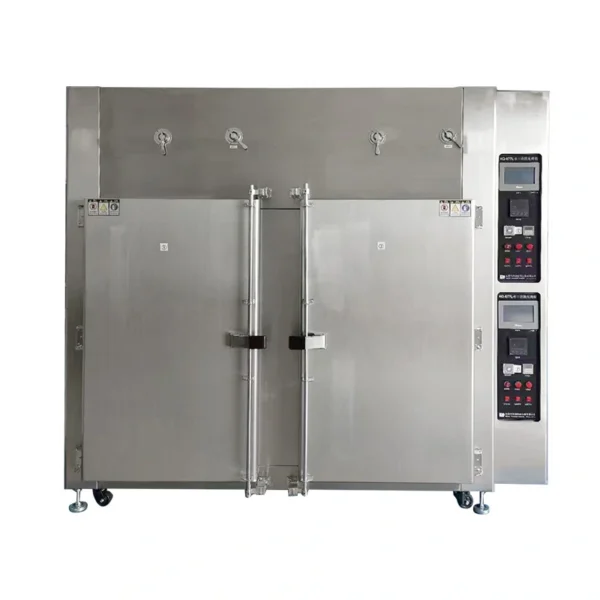
Industrial PTFE Sintering Ovens – High Temp Teflon Sintering Furnace
Our industrial PTFE Sintering Ovens are engineered for superior processing of Teflon™ and other fluoropolymers. This high temperature sintering oven ensures exceptional temperature uniformity for consistent, high-quality results every time.
Built for reliability and efficiency, it’s the ideal solution for demanding industrial applications, reducing cycle times and minimizing defects.