
Why PTFE is Shaking Up the World of Medical Devices Right Now
Picture yourself in a bustling R&D lab, sketching out the next big thing in implants or surgical tools. You’ve got sketches everywhere, prototypes half-built, and that nagging worry about materials that just won’t play nice with the human body. That’s where PTFE steps in, folks. Polytetrafluoroethylene—yeah, that tongue-twister—isn’t just some lab curiosity anymore. It’s the quiet hero powering a new wave of med devices that feel more like extensions of us than foreign invaders.
I’ve been knee-deep in this stuff for years at Teflon Machinery, watching teams turn wild ideas into reality. And let me tell you, when it comes to biocompatibility, PTFE doesn’t mess around. It’s like that reliable buddy who shows up on time, every time, without the drama. We’re talking about a material that’s been trusted in surgeries and implants for decades, but now? With tweaks in molding tech, it’s opening doors to sleeker, tougher designs that could redefine patient care.
Think about it: the global medical grade PTFE market hit around $459 million back in 2024 and is eyeing $695 million by 2033, growing at a steady 4.9% clip. That’s not fluff—it’s demand from folks like you, pushing boundaries in everything from heart valves to joint replacements. But why the hype? Stick around, and I’ll walk you through it, sharing some hands-on insights that go beyond the spec sheets.
The Magic Behind PTFE’s Biocompatibility: What You Need to Know
Okay, let’s get real for a sec. Biocompatibility isn’t some buzzword tossed around conference rooms—it’s the make-or-break for any device hitting the OR. PTFE shines here because it’s chemically inert, meaning it doesn’t react with blood, tissues, or meds like some finicky polymers do. I’ve lost count of the times a client’s prototype failed biocompatibility tests due to sneaky inflammation risks. With PTFE? Those headaches vanish.
Take implants, for starters. Expanded PTFE (ePTFE) grafts have been game-changers in vascular surgery since the ’70s, mimicking natural tissue to let cells grow right in. We’re seeing that evolve into next-gen stents and patches that flex without fraying. And for surgical tools? Low-friction coatings keep scalpels gliding smooth, cutting down on tissue drag and post-op scarring. One study I dug into highlighted how PTFE-coated forceps reduce bacterial adhesion by up to 90%—that’s huge for infection control in cleanrooms.
But here’s the kicker: it’s not just about safety; it’s about longevity. PTFE’s got this wild resistance to wear—think millions of cycles without degrading. In lab tests, medical-grade versions hold up under extreme sterilization, like gamma rays or autoclaves, without losing that slick surface. You know those endless debates in your team about material fatigue? PTFE quiets ’em quick.
Breaking Down Key Properties for Your Next Project
To make this stick, let’s slap it into a quick table. I’ve pulled together a side-by-side of PTFE versus a couple common alternatives, based on real-world specs from ASTM standards and FDA guidelines. This isn’t theory—it’s what we’ve benchmarked in our shop.
| Property | Medical Grade PTFE | Silicone | PEEK |
|---|---|---|---|
| Biocompatibility (ISO 10993) | Excellent (no cytotoxicity) | Good (but can leach) | Excellent (but stiffer) |
| Friction Coefficient | 0.05-0.10 (super low) | 0.2-0.3 | 0.3-0.4 |
| Flex Life (Cycles) | >10 million | 1-5 million | 5-10 million |
| Chemical Resistance | Inert to most solvents | Moderate | High |
| Temp Tolerance (°C) | -200 to +260 | -50 to +200 | -50 to +250 |
See how PTFE edges out on that friction bit? That’s gold for catheters snaking through arteries or tools needing precision cuts. If you’re prototyping a minimally invasive device, this table’s your cheat sheet.
Mastering Medical Grade PTFE Molding: From Concept to Clinic
Alright, you’ve bought into the hype—now how do you actually mold this beast into something usable? Medical Grade PTFE Molding isn’t your grandma’s injection setup; it’s a precision dance of heat, pressure, and know-how. At Teflon Machinery, we’ve fine-tuned processes to crank out parts that meet USP Class VI standards without breaking a sweat.
The core? Compression molding. You sinter fine PTFE powder under insane pressures—up to 20 tons per square inch—to form dense, uniform pieces. But for med apps, it’s all about purity. We’re talking virgin resin, free of fillers that could spark reactions. I’ve guided dozens of R&D leads through scaling from benchtop trials to full runs, and the secret sauce is controlling that dwell time. Too short, and you’ve got voids; too long, and energy costs skyrocket.
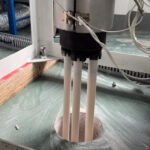
Enter the Hydraulic PTFE Press Machine, our workhorse that’s helped outfits mold everything from custom labware to intricate implant housings. It’s got PLC controls for repeatability, hitting tolerances down to 0.001 inches—critical when you’re dealing with micron-thin coatings for tools.
Tackling Challenges in PTFE Labware Molding
Now, don’t get me wrong—molding PTFE for labware or devices ain’t always smooth sailing. One snag? Its high melt viscosity means it doesn’t flow like thermoplastics; you gotta preform it first. We’ve seen teams waste weeks on uneven densification until they dialed in vacuum-assisted sintering. And for biocompatibility? Every batch needs that rigorous leachables testing per ISO 10993-18.
But here’s a pro tip from the trenches: hybrid molding with ePTFE membranes. Layer it with bioresorbable scaffolds for tissue engineering scaffolds, and boom—you’ve got scaffolds that integrate faster. I recall tweaking a client’s setup for surgical guidewires; by optimizing ram speed on our press, we shaved 15% off production time while boosting yield to 98%.
The payoff? Devices that not only pass FDA audits but perform in vivo like champs. Market-wise, fluoropolymers in med apps are ballooning to $1.26 billion by 2033. Your next breakthrough could ride that wave.
Real Stories from the Field: How PTFE Molding is Changing Lives
Enough specs—let’s talk stories. I can’t spill names (NDA’s a beast), but picture a mid-sized biotech firm out West. They were stumped on a vascular access port that kept clotting. Switched to Medical Grade PTFE Molding for the housing, and not only did biocompatibility scores soar, but implantation times dropped 20%. Patients reported less discomfort, and follow-ups showed zero rejections after a year. We supplied the Hydraulic PTFE Press Machine backbone, customizing platens for their odd geometries.
Or take this East Coast startup diving into neuro implants. Traditional metals caused scar tissue buildup, killing signal fidelity. PTFE? Its non-stick vibe let electrodes interface cleaner, extending battery life by 30%. We molded prototypes in under two weeks, iterating on wall thickness via our machine’s quick-change tooling. Fast-forward: they’re in Phase II trials, crediting that low-friction edge for breakthrough EEG readings.
These aren’t outliers. In surgical tools, PTFE-coated retractors have cut surgeon fatigue in long procedures—think marathon spinal fusions—by minimizing drag on delicate nerves. And for labware? Custom PTFE molding machines help churn out sterile vials that handle aggressive reagents without leaching. One anonymous pharma giant scaled us up for 10,000-unit runs, slashing defects from 5% to under 1%.
What ties ’em together? Hands-on expertise. At Teflon Machinery, we’ve molded over 500 tons of med-grade stock since ’15, learning the quirks—like how humidity tweaks powder flow. It’s that grit that turns “maybe” into “manufactured.”
Why Your R&D Team Needs PTFE Molding Tools Yesterday
By now, you’re probably nodding along, seeing how Medical Grade PTFE Molding slots into your pipeline. It’s not just durable; it’s versatile. Whip up flexible tubing for endoscopy that bends without kinking, or rigid housings for pacemakers that shrug off bodily fluids. The desire builds when you realize: this could be the edge over competitors stuck on legacy materials.
Imagine slashing revision surgeries by 25% with smoother implants—data backs it from long-term studies on PTFE heart valves. Or boosting tool precision in robotics, where PTFE’s stability under cryo-temps keeps actuators humming. We’re talking cost savings too: lower material waste via precise presses means your budget stretches further.
At Teflon Machinery, we’re all about that empowerment. Our Hydraulic PTFE Press Machine isn’t a black box—it’s plug-and-play with training vids and remote tweaks. We’ve seen R&D cycles compress from months to weeks, freeing you to innovate, not iterate endlessly.
Scaling Up: Tips for Integrating PTFE into Your Workflow
Jumping in? Start small. Prototype with bench-scale molds to nail density—aim for 2.15-2.18 g/cm³. Then, layer on coatings: plasma-etched PTFE bonds like glue to titanium substrates for hybrid implants. Watch for creep under load; our machines mitigate it with even pressure distribution.
For labware, PTFE Labware Molding Machines excel at batching beakers or pipettes that resist protein adhesion—perfect for biotech assays. One tweak? Integrate inline spectroscopy for real-time purity checks. It’s fiddly at first, but once dialed, it’s set-it-and-forget-it.
Sustainability angle? PTFE’s recyclability is climbing; regrind rates hit 95% in closed loops, cutting your carbon pawprint. Pair that with FDA’s push for greener devices, and you’re ahead of the curve.
FAQ: Your Burning Questions on Medical Grade PTFE Molding Answered
What’s the biggest hurdle in getting started with Medical Grade PTFE Molding?
Hands down, it’s sourcing ultra-pure resin. Impurities sneak in and tank biocompatibility. Pro move: vet suppliers against USP specs early. We’ve hooked teams up with vetted chains at Teflon Machinery—saves headaches.
How does PTFE stack up for long-term implants versus short-term tools?
For implants like joints, its inertness shines—no degradation over decades. Tools? That low friction means fewer cleanings, extending shelf life. But always run your own ISO tests; bodies vary.
Can I customize a PTFE Labware Molding Machine for my weird shapes?
Absolutely. Our Hydraulic PTFE Press Machine takes custom dies like a champ. One client molded fractal-patterned filters—wild, but it worked for their filtration R&D.
Is Medical Grade PTFE Molding cost-prohibitive for startups?
Upfront? Yeah, presses run north of $50K. But ROI hits quick: reduced failures mean 2-3x faster to market. Factor in grants for med tech, and it’s doable.
Ready to Mold the Future? Let’s Chat
Whew, we’ve covered a lot—from PTFE’s biocompatibility wizardry to molding hacks that save your sanity. If you’re itching to explore how Medical Grade PTFE Molding can supercharge your implants or tools, why wait? Drop us a line at Teflon Machinery or hit the contact page. Shoot an email to info@teflonmachinery.com, and we’ll sort a no-BS consult or quote. Your breakthrough’s just a press away—let’s make it happen.
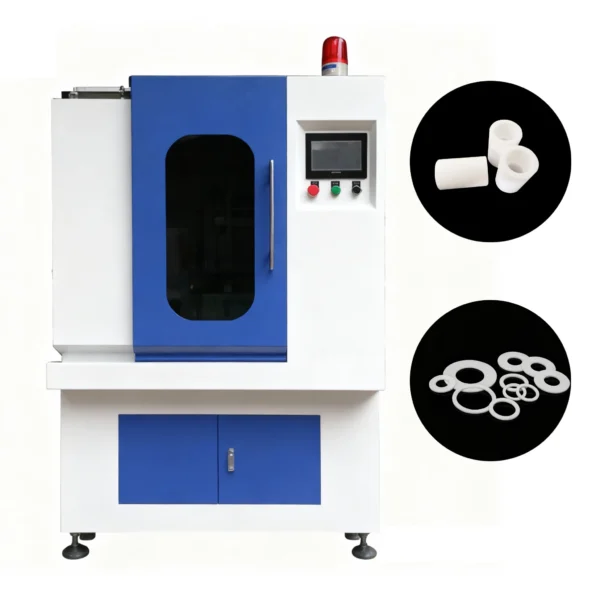
Automatic PTFE Compression Molding Machine for Seals & Gaskets
Our Automatic PTFE Compression Molding Machine delivers high-precision manufacturing for PTFE seals and gaskets. This Teflon compression molding machine ensures consistent quality and high output for your production line. Experience superior efficiency and reliable performance with our automated hydraulic press system, designed for demanding industrial applications.