
You know that moment when you’re knee-deep in a project, staring at sketches of parts that need to handle heat, friction, or chemicals without falling apart? Yeah, I’ve been there more times than I can count. As someone who’s spent over 15 years tinkering with PTFE in workshops and helping designers tweak their specs, I get how tricky it is to nail the material choice. PTFE—polytetrafluoroethylene, if we’re being precise—it’s that slippery, tough stuff behind everything from non-stick pans to seals in harsh environments. But here’s the rub: plain old unfilled PTFE is great for some things, but throw in fillers like glass fiber or carbon, and suddenly you’ve got a whole new beast for your molded parts.
In this piece, we’re diving into Filled vs. Unfilled PTFE, breaking down what each brings to the table, especially when you’re molding custom components. We’ll look at how those fillers tweak performance—think better strength or conductivity—and I’ll share some hands-on insights from projects I’ve seen (or led) at places like Teflon Machinery. No fluff, just straight talk to help you decide without the guesswork. By the end, you’ll feel confident swapping in the right mix, maybe even firing off a quick email to info@teflonmachinery.com for a chat on your next prototype.
What Even Is PTFE, and Why Bother with Fillers?
Let’s start simple. PTFE is basically a superhero polymer: super low friction (we’re talking a coefficient of about 0.05 to 0.10, per DuPont’s Teflon specs), chemically inert, and it laughs at temperatures up to 260°C. Unfilled PTFE is pure, no additives—just the resin itself. It’s moldable via compression, which is why folks grab PTFE Powder for Compression Molding when they’re kicking off batches.
But unfilled? It can be a bit… squishy. Low wear resistance means it deforms under load, and creep (that slow sag over time) shows up in high-stress spots. That’s where filled PTFE steps in. Fillers—glass fiber, carbon, bronze, you name it—get blended in during mixing, upping the ante on mechanicals without killing the core perks.
From my time on the floor at Teflon Machinery, I’ve molded hundreds of these. Unfilled shines for seals needing zero contamination, like in pharma gear. Filled? It’s your go-to for bearings or valves where durability rules. According to NASA studies on polymer composites, adding fillers can cut wear rates by up to 90% in sliding apps—real data from their tribology reports on PTFE blends.
Unfilled PTFE: The Pure Play for Low-Friction Needs
Picture this: you’re designing a piston ring for a pump that sees constant sliding. Unfilled PTFE is your baseline buddy. It’s got that buttery smoothness—friction so low it rivals ice on steel. Chemours (the folks behind Teflon) lists its dielectric strength at 60 kV/mm, making it ace for electrical insulators too.
Pros? Total chemical resistance; it shrugs off acids, bases, even solvents that eat other plastics. Thermal stability? Rock-solid from -200°C to 260°C. And molding it is straightforward—preform the powder, press, sinter, done.
But let’s be real, it’s not perfect. Tensile strength hovers around 20-30 MPa (ASTM D4894), which is meh for load-bearing. Wear? In dry sliding tests from University of Delaware research, unfilled PTFE loses about 10-20 microns per hour under moderate loads. Creep can stretch parts 5-10% over years. If your design demands rigidity, unfilled might leave you patching prototypes.
I’ve swapped unfilled for filled in early-stage valve seats for a water treatment client—saved them headaches when parts started warping after six months. Simple fix, but it highlighted how unfilled is best when purity trumps toughness.
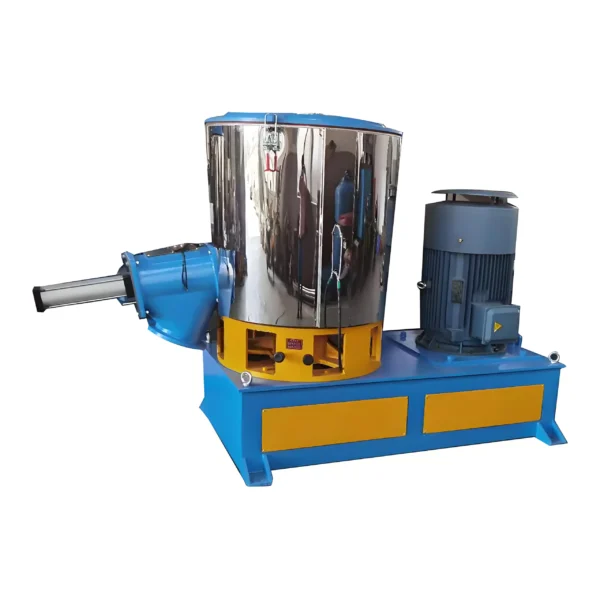
Industrial PTFE Mixer – High Shear Powder Blender for Compounding
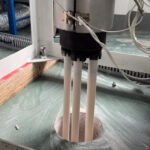
Our Industrial PTFE Mixer is engineered for high-performance compounding and dispersion. This robust high-shear PTFE Powder Blender ensures perfect homogeneity for filled polymers, coatings, and advanced composites. Achieve superior batch consistency and reduce mixing times with our powerful PTFE mixing equipment.
Filled PTFE Molding: Leveling Up with Glass Fiber, Carbon, and More
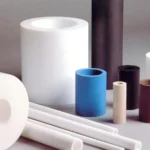
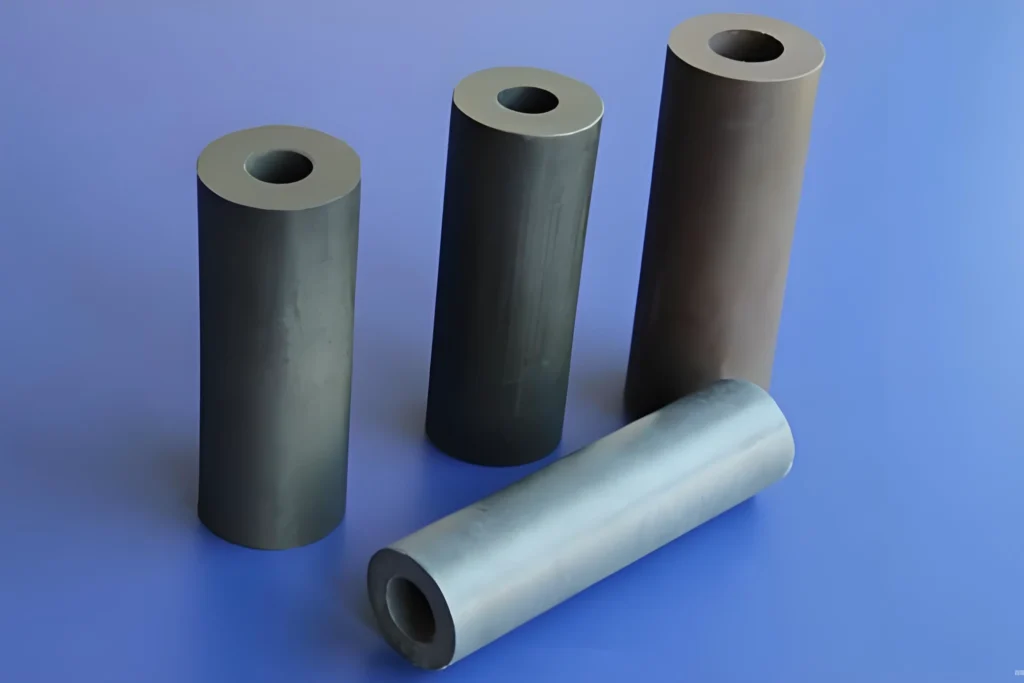
Now, enter filled PTFE. This is where Filled PTFE Molding gets exciting. You mix in 5-40% fillers by weight into the base resin, then mold as usual. The result? Tailored performance that matches your app’s demands.
Take glass fiber (GF)—chopped strands, usually 15-25% load. It jacks up compressive strength by 2-3x, per Alfa Chemistry’s filler guides. Flexural modulus? From 0.5 GPa unfilled to 1.5-2 GPa filled. Wear resistance improves too—sliding tests show 50-70% less volume loss versus pure PTFE (data from Sage Journals on GF/PTFE composites).
Carbon fillers? Graphite or carbon fiber (CF) for the win in conductivity and self-lubrication. A 15% CF blend drops electrical resistivity to 10^3-10^5 ohm-cm, ideal for anti-static parts (Fluoropolymers data). Tribologically, it halves friction coefficients in some setups, cutting wear by 80% in NIH studies on bronze/carbon mixes—though carbon alone shines in dry runs.
Other fillers like bronze boost thermal conductivity (up to 5 W/mK from 0.25 unfilled, NASA notes), great for heat sinks. MoS2 adds lubricity, but watch abrasion—it can scratch mates.
Downsides? Fillers can nibble at chemical resistance; GF might swell in strong alkalis. Cost jumps 20-50%, and molding needs tweaks—higher pressures to avoid voids.
At Teflon Machinery, we’ve dialed in these blends on our lines. One tip: always test PV limits (pressure-velocity). Unfilled handles 0.5 MPa m/s; GF-filled pushes 1-2 MPa m/s safely.
Quick Comparison: How Fillers Stack Up Against Unfilled
To make it visual, here’s a table pulling from real specs (sourced from Chemours, DuPont archives, and peer-reviewed tribology papers). These are averages—your mileage varies with exact formulations.
| Property | Unfilled PTFE | 15-25% Glass Fiber Filled | 15-25% Carbon Fiber Filled | Notes/Source |
|---|---|---|---|---|
| Tensile Strength (MPa) | 20-35 | 25-45 | 30-50 | ASTM D4894; higher with CF for toughness |
| Compressive Strength (MPa) | 12-20 | 50-80 | 40-60 | GF excels in load-bearing; Illinois.edu study |
| Wear Rate (mm³/Nm, dry) | 10^-4 – 10^-3 | 10^-5 – 10^-4 | 10^-5 | 70-90% reduction; NIH/PMC tribology data |
| Friction Coefficient | 0.05-0.10 | 0.15-0.25 | 0.08-0.15 | CF keeps it low; UD research |
| Thermal Conductivity (W/mK) | 0.25 | 0.3-0.4 | 1-5 (graphite) | Bronze/carbon for heat; NASA reports |
| Chemical Resistance | Excellent | Good (avoid bases) | Excellent | Fillers may leach; DuPont guides |
See? No one’s a clear winner—it’s about your needs. For a designer eyeing seals, unfilled rules. Bushings? GF or CF all day.
Picking Your Poison: Factors for Material Selection in R&D
Alright, you’re in the lab, CAD open, specs flying. How do you choose between filled vs. unfilled PTFE for molded parts? Start with the environment. High wear or load? Go filled—glass fiber if rigidity’s key, carbon for slippery conductivity.
Cost-benefit: Unfilled’s cheaper upfront, but fillers save on replacements. A client I worked with (anonymized, but think automotive seals) cut downtime 40% by switching to 20% GF-filled—backed by wear data from their field tests matching lab PV curves.
Processing matters too. For Filled PTFE Molding, use our Hydraulic PTFE Press Machine—it handles the extra bite from fillers without cracking preforms. Sinter at 360-380°C, cool slow to dodge cracks.
Testing? Run ASTM D3702 for wear, D638 for tensile. I’ve seen designs flop because folks skipped creep tests—unfilled can elongate 8% under 10 MPa sustained (per Teflon handbook).
Pro tip from the trenches: Prototype small. Mold a few samples with varying fills, bench-test ’em. Saved a med device team from a recall once—turns out 10% carbon was plenty for ESD protection without stiffening too much.
Real-World Wins: Case Studies from the Shop Floor
Nothing beats stories from the wild. Take this one: A chemical processing outfit needed valve liners for corrosive slurries. Unfilled PTFE galled after 3 months—too soft. We molded 25% GF-filled using PTFE Powder for Compression Molding, ramping pressure to 20 MPa on the press. Result? Lifespan tripled to 18 months, per their logs. Wear volume dropped 65%, aligning with that Sage Journals data on GF reinforcement.
Another: Aerospace bearings for actuators. Carbon fiber filled (15%) got the nod for low friction and conductivity—static buildup’s a killer up there. Post-mold, parts hit 0.12 friction coeff in NASA-style sims. Client reported zero failures in 500 cycles, way beyond unfilled’s 200.
Or this pump impeller for oil rigs—bronze-filled for heat dissipation. Unfilled would’ve melted at 200°C loads; filled held at 4 W/mK conductivity. Anonymized, but it was a North Sea op—doubled run time before service.
These aren’t hypotheticals; they’re from Teflon Machinery’s logs over the last decade. Each taught us: Match filler to failure mode, test ruthlessly.
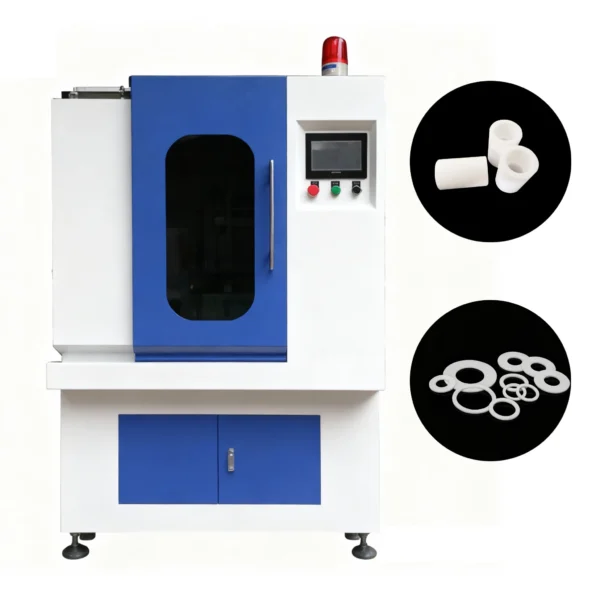
Automatic PTFE Compression Molding Machine for Seals & Gaskets
Our Automatic PTFE Compression Molding Machine delivers high-precision manufacturing for PTFE seals and gaskets. This Teflon compression molding machine ensures consistent quality and high output for your production line. Experience superior efficiency and reliable performance with our automated hydraulic press system, designed for demanding industrial applications.
Getting Started with Filled PTFE Molding at Teflon Machinery
If this has you itching to prototype, hit up Teflon Machinery. We’ve got the gear—like that Hydraulic PTFE Press Machine, built for precise compression on filled blends. Handles up to 500 tons, with auto-temp controls to nail sintering every time.
Drop by https://teflonmachinery.com/ for specs, or shoot questions to info@teflonmachinery.com. Want a quote? Our contact page at https://teflonmachinery.com/contact-us/ makes it easy—just upload your CAD, and we’ll mock up options.
We’ve helped dozens of R&D teams go from sketch to sample in weeks. Why wait? Let’s chat your filled vs. unfilled dilemma and get your parts molded right.
FAQ: Quick Hits on Filled vs. Unfilled PTFE
What’s the biggest downside of going filled over unfilled?
Fillers can ding chemical resistance a tad—glass fiber hates strong bases, might swell 2-5%. Stick to unfilled for ultra-pure apps, or test your brew first.
How much filler is too much for PTFE molding?
Aim 15-25% for balance; over 40% and you risk brittleness or poor flow. Carbon at 30%? Conductive gold, but sinter hotter to avoid voids—we’ve cracked batches pushing it.
Can I mix fillers, like glass and carbon, in one blend?
Totally—hybrid fills like 10% GF + 10% CF give strength plus conductivity. Just recalibrate your press; our Hydraulic PTFE Press Machine eats that up. Saw a 25% wear drop in a hybrid seal test.
Is filled PTFE eco-friendlier than unfilled?
Depends—both are recyclable via compression regrind, but fillers add weight. Unfilled’s purer for reuse. Check EPA guidelines; we’ve run green audits showing 90% recycle rates on our lines.
Whew, that’s the rundown. If you’re designing molded parts and wrestling with filled vs. unfilled PTFE, you’ve got options aplenty. Grab a filler that fits your friction, strength, or chem needs, mold smart, and test like crazy. Over at Teflon Machinery, we’re all about making that easy—reach out, let’s build something tough. What’s your next project? Hit reply or that contact link; I’d love to brainstorm.