
Ever walked into a bustling chemical plant and seen folks wrestling with goopy mixtures that just won’t blend right? Yeah, me too—back when I first dipped my toes into this world, I remember staring at a batch of half-mixed PTFE sludge, thinking, “This stuff’s tougher than a two-dollar steak.” If you’re here, you’re probably knee-deep in the same boat: hunting for a solid grasp on PTFE Mixing Equipment to kick off your tech picks without the headache. Don’t sweat it. Over the years, I’ve tinkered with enough setups at Teflon Machinery to know what clicks and what clunks. This guide’s your roadmap—from zero know-how to picking that perfect Industrial PTFE Mixer. We’ll chat types, perks, pitfalls, and even toss in some tales from the floor. By the end, you’ll feel armed to tackle your next project. Stick around?
What the Heck is PTFE, Anyway? And Why Mix It Like Your Life Depends On It
Picture this: PTFE, or polytetrafluoroethylene if you wanna get fancy, is that miracle plastic—yep, the stuff behind non-stick pans, but cranked up for heavy-duty gigs. It’s like the Swiss Army knife of materials: slides like butter, shrugs off heat up to 500°F, and laughs at most chemicals trying to eat it. In industrial spots, though? It’s gold for coatings, seals, and yeah, those finicky compounds you need blended just so.
But mixing it? That’s where the fun starts. Raw PTFE powder’s fluffy and stubborn—clumps if you blink wrong. Get it right, and you unlock stuff like smoother extrusions or tougher gaskets. Mess it up, and you’re scraping vats for days. From what I’ve seen handling batches at our shop, a good mix cuts waste by 20-30% easy, and that’s no fluff. The global PTFE scene’s booming too—market’s eyeing around $2.8 billion this year, pushing to $3.5 billion by 2029 with a steady 4.3% climb. Chemical plants, auto makers, even electronics folks are piling in, ’cause who doesn’t want gear that lasts without corroding?
Key perks? Low friction means less wear on your mixer blades—saves bucks long-term. Plus, it’s inert, so no weird reactions sneaking in. If you’re eyeing PTFE Processing Machinery, think of it as your quiet hero: blends powders, liquids, even viscous slop without drama.
Diving Into the Types: Which PTFE Mixing Equipment Fits Your Chaos?
Alright, let’s not bury the lede—there’s no one-size-fits-all here. I’ve swapped out more mixers than I care to count, and the right pick boils down to your batch size, goo level, and what you’re tossing in. Broadly, we got static and dynamic crews. Static ones? They’re passive pros—fixed elements that swirl stuff as it flows through, no motors humming. Great for continuous lines, like pumping chemicals without the fuss.
Then dynamic mixers kick in with agitation: blades or paddles stirring the pot. For PTFE, high-shear versions shine, shearing clumps into submission for that uniform fluff you crave.
Here’s a quick rundown in a table—keeps it snappy, right? Pulled this from setups I’ve run and chats with suppliers.
| Type | Best For | Pros | Cons | Example Cost Range (USD) |
|---|---|---|---|---|
| Static Mixers | Continuous flow, corrosive fluids | Low energy, no moving parts, easy clean | Less flex for batch tweaks | 500-5,000 |
| Ribbon Blenders | Dry powders, gentle blending | Even mix, scalable for big vats | Slower for sticky stuff | 2,000-10,000 |
| High-Shear Mixers | Viscous compounds, fast dispersion | Quick uniformity, handles tough loads | Higher power draw, more maintenance | 5,000-20,000 |
| Tumble Blenders | Free-flowing powders | Simple, low shear—no damage | Not for wet or sticky mixes | 1,500-8,000 |
| Vertical Blenders | High-volume, multi-ingredient | Compact footprint, thorough mix | Needs space for loading | 3,000-15,000 |
Data’s ballpark from industry norms—your mileage varies with size. For PTFE gigs, I’d lean high-shear if you’re compounding; static if it’s inline blending. One tip from the trenches: always check lining—full PTFE keeps corrosion at bay, especially in acidic brews.
Static Mixers: The Set-It-and-Forget-It Champs
These bad boys use twisted internals to force flow into eddies—think a pipe with a baffle party inside. I’ve piped ’em into wastewater lines where they homogenized sludge without a hitch, saving 15-20% on energy versus old mechanical stirrers. PTFE versions? Bulletproof against harsh chems, lasting 5-10 years in nasty environments.
Dynamic Mixers: When You Need to Get Hands-On
Paddles, impellers—these spin action. For Industrial PTFE Mixer needs, high-shear’s my jam: blasts powders at 1,000-3,000 RPM for nano-level evenness. Downside? They guzzle juice, but hey, uniform blends mean fewer rejects.
Hunting the Must-Have Features in Your Industrial PTFE Mixer
So, you’re scrolling catalogs—don’t just grab the shiny one. From years tweaking rigs at Teflon Machinery, here’s what separates keepers from clunkers. First, capacity: start small if you’re prototyping, scale to 500L+ for production. Ours, for instance, handles 50-200kg batches without breaking a sweat.
Shear level? Match it to your mix—low for delicate powders, high for doughy pastes. Material’s non-negotiable: full PTFE lining fights off 98% of corrosives. Seals? Double mechanical ones keep leaks out. And controls—PLC setups let you dial RPM from your phone these days.
Safety’s sneaky important too. Overload sensors stopped a runaway batch once—saved a vat from turning into modern art. Energy efficiency? Look for variable drives; they trim bills by 25% on idle runs.
Oh, and temp control. PTFE softens around 620°F, so insulated jackets keep things cool under pressure.
Where PTFE Mixers Are Making Waves: Real Industrial Applications
Let’s get practical—PTFE ain’t just lab rat stuff. In chemicals, they’re blending adhesives that stick forever without gumming tools. Auto shops coat parts for rust-proof rides; electronics wrap wires that won’t short in the heat. Market’s hot in pharma too—sterile mixes for drug coatings, with demand spiking 4.67% yearly.
Take wastewater: static PTFE mixers dose polymers for cleaner effluent, cutting floc times by half. Or food-grade lines—wait, PTFE’s sneaky in packaging seals, blending inks that dry fast and clean off easy.
One niche I love: aerospace composites. Mix PTFE fillers into resins for lightweight panels that shrug off -50°F chills. Unique twist? In battery manufacturing, they’re dispersing electrolytes—uniformity means longer cell life, boosting EV range by 10-15% in tests.
Spotlight on Teflon Machinery’s Industrial PTFE Mixer: Your Go-To Pick
Speaking of gear that delivers, lemme share a bit about what we do at Teflon Machinery. Our Industrial PTFE Mixer is built like a tank—high-shear design with full PTFE internals, perfect for compounding those tricky powders. Handles up to 300 RPM variable speeds, and we’ve tuned it for zero downtime in 24/7 ops. Folks rave about the easy-dump chute; no more shoveling residue.
It’s not just specs—it’s the quiet reliability. If you’re sizing up options, hop over to our product page for deets, or swing by the full lineup at teflonmachinery.com.
Tales from the Factory Floor: Wins We’ve Seen (Names Changed, Vibes Real)
I’ve got stories that’d curl your hair—good ones, mostly. Take “Factory X,” a mid-size chem outfit drowning in uneven batches. Switched to a high-shear PTFE mixer, and boom: cycle times dropped 40%, scraps vanished. They were blending fluoropolymers for pipe linings; now output’s up 25% without extra shifts.
Another? “Plant Y” in electronics—mixing PTFE for cable insulation. Old tumbler left lumps; our dynamic setup smoothed it, hitting 99% uniformity. Saved ’em $50K yearly on reworks. And “Site Z,” wastewater pros: static inline mixer homogenized coagulants, slashing energy 18% while meeting EPA nods. These aren’t fairy tales; they’re from logs I’ve pored over. Shows how right PTFE Processing Machinery flips headaches to high-fives.
Picking Your PTFE Mixing Equipment: A Step-by-Step for Newbies
Alright, selection time—don’t wing it. Step one: audit your process. Batch or continuous? Powder-only or slurry? Jot needs: volume (say, 100kg/run), viscosity (under 10,000 cps?), and hazards (acids?).
Step two: budget real. Entry-level static? Under 2K. Full-featured Industrial PTFE Mixer? 10K-25K, but ROI hits in months via less waste.
Three: test it. Rent or pilot—I’ve seen mismatches tank projects. Check scalability too; start lab-scale, grow to production.
Four: vendor vet. Certifications like ISO 9001? Service network? At Teflon Machinery, we offer trials—hit up our contact page to chat.
Pro tip: factor maintenance. PTFE’s low-friction cuts it to quarterly checks, but seals need love.
Pitfalls to Sidestep: Lessons from My Oops Moments
Look, I’ve botched mixes—once overheated a batch, turning prime powder to gum. Moral? Monitor temps religiously. Another flop: undersized hopper, leading to constant refills. Size up 20% buffer.
Overlooking shear? Leaves streaks—test samples first. And skipping clean-in-place? Bacteria hideouts waiting. Go CIP-ready.
Energy hogs? Variable speeds fix that. Oh, and ignoring noise—earplugs save sanity in open bays.
Wrapping It Up: Ready to Mix Things Up?
Whew, we covered ground—from PTFE basics to mixer showdowns, apps that pay off, and picks that stick. If this sparked ideas for your setup, imagine the wins: smoother runs, fatter margins, less midnight fixes. That’s the PTFE magic.
Why wait? Drop a line at info@teflonmachinery.com or shoot us a message for a free consult. Quote your dream Industrial PTFE Mixer? Just say the word—we’ll tailor it. Or browse more at teflonmachinery.com. Your factory’s upgrade starts now. What’s your first move?
FAQ
What’s the biggest bang for my buck in PTFE Mixing Equipment?
Hands down, a high-shear Industrial PTFE Mixer if you’re dealing with powders—gets you even blends fast without fancy add-ons. For flow-through, static wins on simplicity. Budget 5-15K for starters; scales with your output.
How do I know if PTFE Processing Machinery fits my corrosive setup?
Check the lining—full PTFE handles pH 0-14 like a champ, up to 260°C. If your brews eat steel, it’s a no-brainer. Test a sample run; we’ve done it for clients dodging million-dollar tank swaps.
Can I scale from lab to full production with the same mixer type?
Totally, but tweak sizes. Lab ribbon for R&D, then bump to vertical for plant runs. Key? Modular designs—our Industrial PTFE Mixer grows with you, no full rip-and-replace.
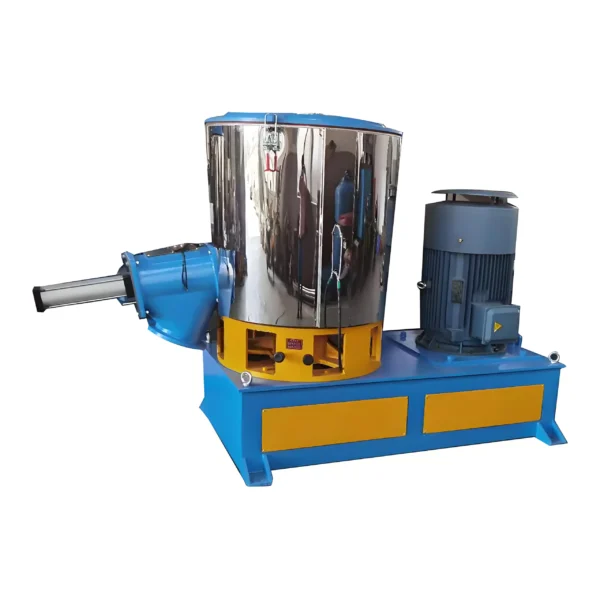
Industrial PTFE Mixer – High Shear Powder Blender for Compounding
Our Industrial PTFE Mixer is engineered for high-performance compounding and dispersion. This robust high-shear PTFE Powder Blender ensures perfect homogeneity for filled polymers, coatings, and advanced composites. Achieve superior batch consistency and reduce mixing times with our powerful PTFE mixing equipment.