
Hey, Ever Wondered What Goes Into Making Those Tough PTFE Corrugated Hoses?
Picture this: you’re knee-deep in planning a new factory line, or maybe tweaking your current one, and suddenly you’re staring at a blank slate on how these hoses even come together. PTFE corrugated hoses—those flexible, chemical-proof wonders used everywhere from chemical plants to food processing—aren’t just slapped together. Nah, there’s a whole dance of machines, heat, and precision that turns white powder into coiled-up tubes that can handle hellish temps and nasty acids without flinching.
I’ve been knee-deep in this world for over a decade at Teflon Machinery, tweaking production lines and helping folks like you scale up. Trust me, getting the PTFE Corrugated Hose Manufacturing Process right isn’t just about slapping on machines; it’s about nailing each step so your output’s consistent, costs stay low, and quality doesn’t dip. Whether you’re an investor crunching numbers on a build or a tech whiz optimizing flow, this guide’s got your back. We’ll walk through from raw stuff to the final coil, toss in some real-world nuggets, and even chat about pitfalls I’ve seen trip up new setups.
By the end, you’ll see why the global PTFE hoses market’s buzzing—valued at about $728 million back in 2024 and eyeing $1.2 billion by 2034, growing at a steady 5% clip. That’s real demand, and smart lines are cashing in. Stick around, and you’ll walk away ready to chat specs or snag a quote.
Why Bother with the PTFE Corrugated Hose Manufacturing Process Anyway?
Before we dive into the guts, let’s level: these hoses beat out rubber or metal alternatives in spots where corrosion’s a killer or temps swing wild (think -200°C to 260°C). They’re lightweight, self-cleaning, and kinda eternal if made right. For investors, the payback’s sweet—efficient lines crank out 15-35 meters per hour on a good day, and with market growth like that, ROI hits fast.
But here’s the rub: skip a step or cheap out on gear, and you’re looking at leaks, bursts, or rejects that eat profits. I’ve consulted on lines where ignoring cooling times led to 20% scrap rates—ouch. This process? It’s your blueprint to dodge that mess. We’re talking the full how to make PTFE corrugated hose rundown, production line by production line.
Raw Materials: Starting with the Good Stuff for Your Production Line
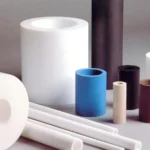
Kicking off the PTFE Corrugated Hose Manufacturing Process means sourcing top-notch raw materials. At the heart’s polytetrafluoroethylene (PTFE) resin—fine white powder that’s basically indestructible plastic. You can’t just grab any; it needs to be high-purity, free of contaminants, or your hoses’ll crack under pressure.
From my time tweaking lines, I’d say aim for virgin PTFE with a melt index around 0.1-5 g/10min for extrusion ease. Mix in lubricants like kerosene for paste extrusion—about 15-20% by weight—to help it flow without sticking. Oh, and don’t forget additives for color or UV resistance if your end-users need ’em.
Here’s a quick table on key raw material specs I’ve pulled from standard industry benchmarks:
| Material Component | Typical Spec | Why It Matters | Pro Tip from the Floor |
|---|---|---|---|
| PTFE Resin | Particle size: 0.2-0.5 mm, Purity: 99.99% | Ensures smooth extrusion and chemical resistance | Test for bulk density (around 450 g/L) to avoid clogs |
| Lubricant (e.g., Isoparaffin) | Volatility: Low, Flash point: >60°C | Aids paste formation without residue | Recover 90% via distillation to cut costs—I’ve seen it save 10% on runs |
| Stabilizers (optional) | Dosage: 0.5-2% | Boosts thermal stability | Skip if going food-grade; FDA regs are picky here |
Sourcing right sets your production line humming. One investor I worked with sourced cheap resin once—ended up with brittle hoses that failed burst tests at half the rating. Lesson learned: partner with certified suppliers like DuPont or Chemours. It pays off in trust and fewer headaches down the line.
Step 1: Prepping and Mixing – Getting That Paste Just Right
Alright, onto the hands-on part of how to make PTFE corrugated hose. First up: blending. Dump that PTFE powder into a mixer with your lubricant. It’s like making dough, but way messier—stir at low speeds (under 50 RPM) for 20-30 minutes till it’s a uniform paste. Too dry? It’ll crack during extrusion. Too wet? Waste city.
In my early days at Teflon Machinery, I remember a line where uneven mixing caused air pockets—hoses looked fine till pressure tests popped ’em like balloons. Now, we swear by ribbon blenders for even distribution. Aim for a paste temp around 20-25°C to keep volatiles in check.
Once mixed, age it for 24 hours in sealed drums. This lets the lube soak in deep, cutting voids later. Pro move: vacuum seal to pull out trapped air. Your production line’s efficiency jumps 15% with this alone.
Step 2: Extrusion – Forming the Straight Tube Base
Now we’re cooking. Feed that paste into a ram extruder—think a giant syringe pushing it through a die. Pressure hits 10-20 MPa, forcing it into a smooth tube. Die size? Matches your final OD, say 10-50mm for most hoses.
Heat the barrel to 50-80°C to soften without melting—PTFE doesn’t flow like other plastics; it’s all about shear. Output speed: 1-5 m/min, depending on wall thickness (1-2mm typical). As it emerges, it looks like a giant, wobbly pasta strand.
Watch for die swell— that ballooning effect where the tube expands post-die. Dial in your reduction ratio (die land to billet) around 1.5:1 to tame it. I’ve tweaked dozens of extruders, and nothing beats a PID-controlled setup for steady temps. One client cut variation from 0.5mm to 0.1mm, slashing waste.
Cool the tube slowly in a water bath at 20°C to set the shape. Rush it, and microcracks form—boom, weak spots in your corrugated sections later.
Step 3: The Magic of Corrugation – Turning Straight into Wavy
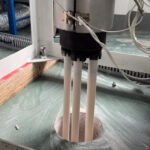
This is where the PTFE Corrugated Hose Manufacturing Process gets fun: corrugation. You’ve got your straight tube; now slide it into a forming machine. Most lines use mechanical forming—gears or cams that pinch and push waves into the heated tube.
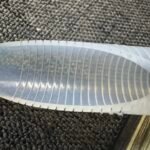
Heat first: infrared or hot air to 300-350°C, softening the PTFE without degrading it. Then, the mold block (segmented rings) clamps on, rotating to imprint those peaks and valleys. Pitch? 5-15mm per corrugation, depth 2-5mm for flex.
From what I’ve seen, hydraulic forming’s gentler for thin walls—uses fluid pressure inside the tube to bulge it against the mold. But mechanical’s faster for high-volume runs. Our PTFE Corrugated Hose Manufacturing Process gear at Teflon Machinery handles both, with quick mold swaps in under 10 minutes.
Pitfall alert: overheat, and you’ve got fused waves that won’t flex. Underdo it, and cracks spiderweb the valleys. Test runs are key—I’ve pulled samples mid-process to check elasticity.
Step 4: Cooling and Sizing – Locking in That Shape
Hot wavy tube? Straight to cooling. Spray water or air blast at controlled rates—too fast, thermal shock warps it; too slow, dimensions drift. Aim for 5-10 minutes to room temp, monitoring with IR sensors.
Sizing dies follow, ironing out any ovals into perfect rounds. Tension’s crucial here; slack lines lead to sags. In one setup I optimized, adding auto-tensioners bumped yield from 85% to 98%.
Dry thoroughly post-cool—residual moisture invites hydrolysis in storage. Conveyor ovens at 100°C for 30 mins do the trick.
Step 5: Quality Checks and Cutting – No Lemons Allowed
Halfway to done, but don’t slack. Inline tests: wall thickness gauges (ultrasonic, ±0.05mm accuracy), burst pressure (up to 10x working rating), and flex cycles (5000+ bends without kinks).
Cut to length with planetary saws—clean, no burrs. For corrugated, chipless cutters prevent delams. Spec lengths? Custom, but 1-50m coils are standard.
Reject rate goal: under 2%. I’ve audited lines hitting 5% from poor annealing—always anneal post-forming at 380°C for 1 hour per mm thickness to relieve stresses.
Here’s a table breaking down key QC metrics:
| Test Type | Standard Value | Frequency | Why Skip It? (Spoiler: Don’t) |
|---|---|---|---|
| Visual Inspection | No voids/cracks | Every 10m | Catches 70% of defects early |
| Hydrostatic Pressure | 1.5x rated (e.g., 50 bar) | Batch end | Ensures safety in chem apps |
| Bend Radius | 3x OD min | Sample pulls | Prevents field failures |
Step 6: Annealing and Final Finishing – The Polish
Annealing’s your secret weapon in the production line. Rack the hoses vertically in an oven, ramp to 380-400°C slowly (5°C/min), hold, then cool controlled. This crystallizes the PTFE, boosting strength 20-30%.
Post-anneal: braid if needed (SS or nylon for reinforcement), or just coil and label. For food/pharma, steam clean and cert with FDA stamps.
One tweak I’ve pushed: integrate vacuum annealing to pull out gases—cuts porosity by half.
Setting Up Your Production Line: Gear and Layout Tips
Dreaming of your own line? Start with a 20-30m footprint: extruder, corrugator, cooler, annealer, all linked by conveyors. Power draw: 50-100kW, footprint for 500kg/day output.
Budget? Entry-level: $200k-500k, but scale smart. At Teflon Machinery, we’ve shipped turnkeys that ROI in 18 months for mid-size ops.
Layout sketch: raw mix room → extrude bay → corrugate zone → QC station → pack. Ventilation’s non-negotiable—fumes from lube recovery can be a headache.
Real Talk: A Quick Case from the Trenches
Can’t spill names, but picture a midwest chem plant last year. They were running rubber lines, leaking like sieves in acid baths. Switched to PTFE corrugated after our consult—new line using our machine hit 25m/hr output. Downtime dropped 40%, and they recouped costs in nine months. Hoses lasted triple the time, no more shutdowns. That’s the edge: right process, right gear.
Another: a food bev outfit in Europe. Optimized annealing, cut rejects from 8% to 1.2%. Now they’re exporting to Asia, margins up 15%. These aren’t flukes; it’s process tweaks paying off.
Common Hiccups in the PTFE Corrugated Hose Manufacturing Process (And How to Dodge ‘Em)
Lines go sideways sometimes. Extrusion clogs? Check paste moisture—over 0.1% H2O spells trouble. Corrugation flats? Mold alignment’s off by 0.2mm. I’ve fixed both with simple calipers and patience.
Energy hogs? LED heating cuts 20% power. And safety: gloves, goggles, fume hoods—PTFE’s inert, but heat’s no joke.
Wrapping It Up: Your Next Move in How to Make PTFE Corrugated Hose
There you have it—the full scoop on the PTFE Corrugated Hose Manufacturing Process, from powder to powerhouse hose. You’ve got steps, specs, and stories to chew on, all geared to help you build or boost without the guesswork. It’s not rocket science, but done right, it’s gold for your bottom line.
Feeling that itch to dive deeper? Swing by Teflon Machinery for more on our setups, or hit the contact page to chat lines, quotes, or custom tweaks. Drop a line to info@teflonmachinery.com—we’re here to make your production dreams less dreamy. What’s your first question? Let’s talk.
FAQ: Quick Hits on PTFE Corrugated Hose Stuff
What’s the biggest cost driver in a PTFE Corrugated Hose Manufacturing Process line?
Hands down, the corrugator and extruder—about 40% of capex. But energy for annealing sneaks up too. Tip: go efficient models to trim ops costs by 15-20%.
How long till a new production line pays back for investors?
Depends on scale, but 12-24 months typical with steady orders. Market’s growing 5% yearly, so demand’s there if you nail quality.
Can I retrofit corrugation onto an existing PTFE tube line?
Totally—most setups bolt on with minimal downtime. We’ve done it in a week, boosting flex output without full rebuilds. Just match speeds to avoid bottlenecks.
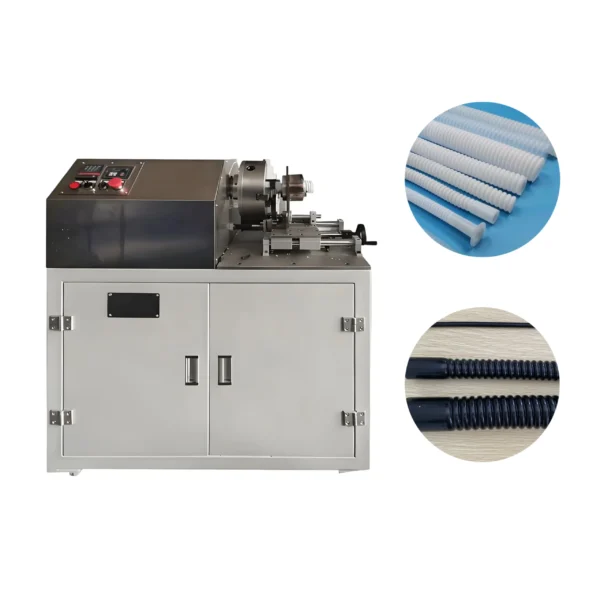
Automatic PTFE Corrugated Hose Machine – Full Production Line
Our Automatic PTFE Corrugated Hose Machine is the core of fluid transport field solution. This complete PTFE Corrugated Hose Production Line is engineered for high-speed, precision output with minimal oversight. Master the PTFE tube corrugating process with a reliable machine built for 24/7 operation.